Ever wondered if you could turn that song you just wrote, or even just a rough audio file, into a full-blown music video without a huge budget or a film crew? It sounds like science fiction, but the answer is increasingly yes. You’re probably curious about how this whole process works and what tools are out there. Let’s break down how AI is changing the game for music visuals, making it easier than ever to ask: can AI create music videos from audio?
Key Takeaways
- AI tools can now take an audio file and automatically generate a synchronized music video, complete with visuals that match the music’s rhythm and mood.
- Some platforms can even create the song itself from a text description and then turn that audio into a video, all within one workflow.
- These tools are great for independent musicians, social media creators, and marketers who need professional-looking videos without the high cost or technical skill.
- You can usually choose from different visual styles and export your video in various formats suitable for platforms like TikTok, Instagram, and YouTube.
- While AI does a lot of the heavy lifting, you often still have options to edit captions, swap visuals, or fine-tune the final output to add your personal touch.
Understanding AI Music Video Generation
What Is An AI Music Video Generator?
An AI music video generator is a tool that uses artificial intelligence to create visual content for your audio. You give it your music, and it produces a video that matches the rhythm and mood. These tools automate the entire process, taking the manual work out of video editing. They analyze your song’s structure, beats, and even lyrics to generate scenes. This means you can get a music video without needing to be a video editing expert.
How AI Transforms Audio Into Visuals
AI analyzes your audio file to understand its key characteristics. It looks at the tempo, the intensity of the music, and where the beats drop. Some advanced tools can even process the lyrics to match visuals to specific words or phrases. The AI then uses this information to select or generate appropriate video clips, animations, or images. It then synchronizes these visuals to the music, creating a cohesive video experience.
The Core Workflow For Creating Videos
Getting started is usually straightforward. First, you’ll upload your audio file, whether it’s an MP3, WAV, or even a link from a streaming service. Next, you select your desired visual style. This could range from stock footage to entirely AI-generated scenes or animated lyrics. Finally, you let the AI do its work. It processes the audio and generates the video, often within minutes. You can then review and download your finished music video.
Here’s a typical workflow:
- Upload Audio: Provide your music track.
- Choose Style: Pick from various visual themes.
- Generate Video: Let the AI create the visuals.
- Refine & Download: Make minor adjustments if needed and get your video.
Key Features Of AI Music Video Tools
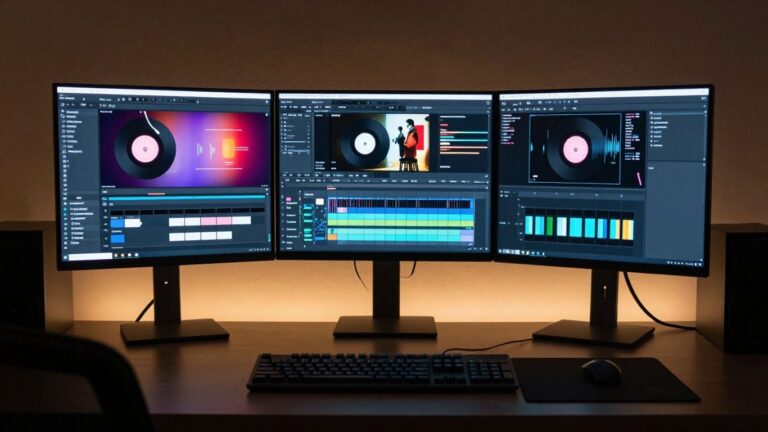
AI music video tools come with a set of features designed to make creating visuals from your audio as straightforward as possible. You’ll find that many of these platforms aim to simplify the entire process, from initial concept to final export.
Integrated Song And Video Creation
Some tools let you do more than just generate a video from an existing track. You can actually create the song itself using AI, then immediately turn that into a music video. This means you don’t need to switch between different applications or services to get your music and visuals made. It’s a streamlined approach for when you have an idea but no existing audio.
Versatile Output Formats
When you create a music video, you usually want it to look good on various platforms. The best AI tools support multiple aspect ratios. You can export your video in vertical (9:16) for TikTok and Reels, square (1:1) for Instagram feeds, or widescreen (16:9) for YouTube. This flexibility means your video is ready for almost anywhere you want to share it.
Customizable Visual Styles
AI video generators aren’t limited to one look. You can often choose from different visual styles. Some offer stock footage that the AI matches to your music, while others generate entirely new, unique visuals. You might also find options for animated graphics or stylized effects. This control over the aesthetic helps you match the video’s mood to your song’s vibe.
User-Friendly Interfaces
Most AI music video tools are built with creators in mind, not necessarily video editing pros. You’ll typically find simple, intuitive interfaces. The workflow often involves just a few steps: upload your audio, pick your style, and let the AI do the work. Some platforms even allow you to paste a link from streaming services directly to start the process. This makes creating a music video accessible even if you have no prior editing experience. You can get a polished result quickly, often within minutes. For example, some tools offer a simple, two-click process to get started with AI-powered video creation.
The goal of these tools is to remove technical barriers. You should be able to focus on your music and creative vision, rather than getting bogged down in complex software. The process is designed to be fast and efficient, letting you experiment with different visual ideas without a huge time investment. You can often upload your music tracks and see results almost immediately.
Practical Applications For Creators
AI music video tools open up a lot of possibilities for anyone making content. You don’t need a big budget or a film crew anymore to get professional-looking visuals for your music.
Empowering Independent Musicians
If you’re an independent artist, these tools are a game-changer. You can now create music videos that match the quality of your tracks without spending thousands of dollars. This means you can release more music visually, keeping your audience engaged. You can experiment with different styles and concepts for each song, making your releases feel more complete and professional. Tools like Sondo can help you turn your audio files into impressive visuals quickly.
Enhancing Content For Social Media
Social media platforms thrive on video. AI music video generators let you create eye-catching content optimized for platforms like TikTok, Instagram Reels, and YouTube Shorts. You can quickly generate multiple video variations from a single song to test what works best with your audience. This makes it easier to maintain a consistent presence and grab attention in a crowded feed. You can even use these tools to create looping visuals for platforms like Spotify Canvas.
Streamlining Marketing Campaigns
For artists and labels, marketing campaigns just got simpler. You can produce promotional videos for new releases, tours, or merchandise much faster. Instead of lengthy production schedules, you can generate visuals in minutes. This speed allows for more agile marketing, letting you react to trends or create content on demand. It’s about getting your music and message out there effectively, without the usual production hurdles.
Navigating The Competitive Landscape
The AI music video generator market is growing fast. You’ll find a range of tools, each with its own strengths. Some focus solely on turning audio into visuals, while others offer a more complete package.
Tools Offering Combined Functionality
Some platforms aim to be an all-in-one solution. They let you create the song and the video within the same interface. This means you don’t have to jump between different apps or subscriptions. This integrated approach can save you time and simplify your workflow. For example, Creatus.AI offers both text-to-song generation with AI vocals and audio-to-video production in one place.
Specialized Audio-To-Video Generators
Other tools specialize purely in the audio-to-video aspect. These often provide more advanced controls for visual customization and synchronization. You might find features like detailed timeline editing or specific AI models for generating unique styles. Neural Frames, for instance, focuses on frame-by-frame editing and audio-reactive visuals, supporting various AI models.
Distinguishing Features Of Top Platforms
When looking at different platforms, consider what makes them stand out. Some offer unique features like realistic lip-syncing for performance videos, while others excel at creating abstract visualizers. The AI video market is projected to reach USD 42.29 billion by 2033, showing how much innovation is happening.
Here’s a quick look at what some tools offer:
- Freebeat: Known for lip-syncing and performance-style scenes.
- Neural Frames: Offers frame-by-frame editing and advanced visual control.
- LTX Studio: Provides cinematic output and is built for larger-scale production.
- Revid.ai: Focuses on fast, beat-synced generation, especially for short-form content.
Choosing the right tool often comes down to your specific needs. Do you need a complete song and video creation suite, or are you looking for specialized visual effects for existing audio? Think about your budget, technical skill level, and the type of output you want.
Many platforms provide free tiers or trials. This lets you test out their capabilities before committing. You can experiment with different styles and workflows to see what fits best for your projects. The AI in Music Market is also growing rapidly, expected to reach USD 60.4 billion by 2034.
Technical Considerations For AI Video
When you’re looking to create music videos with AI, there are a few technical points you’ll want to keep in mind. Understanding these can help you get the best results and avoid unexpected issues.
Supported Audio and Video File Formats
Most AI video tools are pretty flexible with audio inputs. You’ll commonly find support for standard formats like MP3 and WAV. These are widely used, so you likely won’t have trouble uploading your tracks. Some platforms might also accept other formats, but it’s always good to check the specifics.
For video output, you’ll usually have options for different aspect ratios. This is important for tailoring your video to platforms like TikTok (9:16), Instagram (1:1 or 9:16), and YouTube (16:9). Getting the right output format means your video will look good wherever you share it.
Understanding AI Video Generation Time
The time it takes for AI to generate a video can vary quite a bit. Factors like the length of your song, the complexity of the visuals you’ve chosen, and the platform’s processing power all play a role. Simple, shorter videos might take just a few minutes. Longer, more intricate ones could take longer, sometimes even hours.
It’s helpful to plan ahead. If you have a deadline, start the generation process early. Some tools might offer faster processing as a premium feature. You can often get a sense of the estimated time before you commit to generating the video.
Copyright and Monetization of AI Content
This is a big one for creators. Generally, AI-generated visuals themselves don’t trigger copyright claims. The risk of copyright flags or demonetization on platforms like YouTube or TikTok usually comes from the music itself, not the visuals. If your audio track is clear, your AI-generated video should be too.
You own the commercial rights to AI-generated visuals, provided you’ve made creative decisions in the process. Platforms are cracking down on purely mass-produced, low-effort content, but artist-directed AI videos are typically fine. Always check the specific platform’s terms of service regarding AI content and monetization.
When you use AI tools to create visuals, you’re essentially directing the AI. This means you’re making creative choices about style, pacing, and content. As long as your music is cleared, you can usually monetize your AI-created music videos. You might need to disclose if the visuals could be mistaken for real footage, but stylized or abstract videos usually don’t require a special label. You can find more information on AI music video generation to understand the landscape.
The Future Of AI In Music Visuals
You’re probably wondering what’s next for AI in music videos. The technology is moving fast, and it’s not just about making simple animations anymore. We’re seeing AI get much better at understanding the nuances of music, like mood and energy, and translating that into visuals.
Advancements In AI Synchronization
Expect AI to get incredibly good at syncing visuals perfectly with your music. This means not just matching beats, but also capturing the emotional arc of a song. You’ll be able to guide the AI to create specific visual moments that align with lyrical themes or instrumental breaks. This level of detail will make your videos feel more intentional and professional.
Expanding Creative Possibilities
AI tools are starting to offer more control over the creative process. You can already customize visual styles and themes, but future tools will likely give you even finer control. Think about directing specific camera angles or character movements, all driven by your audio input. This opens up entirely new ways to express your music visually, going beyond what was previously possible without a large production team. Some platforms are already integrating advanced features like frame-by-frame editing for this very reason.
AI’s Role In The Music Industry
AI is becoming a standard tool for musicians, especially independent artists. It lowers the barrier to entry for creating high-quality music videos, allowing you to compete with bigger acts. As AI gets better, it will likely influence how music is produced and consumed. You might see more artists using AI to generate not just videos, but also entire songs, creating a complete package. This trend is already visible with platforms that offer integrated song and video creation.
The goal isn’t to replace human creativity, but to augment it. AI will become a powerful collaborator, helping you bring your musical ideas to life visually in ways you might not have imagined.
Here’s a look at what you can expect:
- More sophisticated visual generation: AI will create more unique and complex imagery, moving beyond generic stock footage.
- Deeper audio analysis: Tools will better interpret musical structure, dynamics, and emotion for more accurate visual representation.
- Enhanced user control: You’ll have more options to fine-tune the AI’s output, ensuring the final video matches your artistic vision.
- Integration with other AI tools: Expect AI video generators to work alongside AI music composition and other creative AI applications.
Imagine music videos that change and grow with the beat, all thanks to smart computer programs! AI is making this a reality, creating amazing visuals from just a few words. Want to see how this cool tech works and maybe even try it yourself? Visit our website to explore the exciting world of AI-powered music visuals and start creating your own today!
So, Can AI Make Music Videos From Audio?
Yeah, pretty much. You can take your audio file and turn it into a music video without needing to be a video pro. Tools like Creatus AI are doing this now, combining song creation and video making in one spot. You upload your track, pick a style, and the AI does the heavy lifting, syncing visuals to your music. It’s not perfect, and you might want to tweak things a bit afterward, but it gets you a usable video fast. For independent artists or anyone needing quick visuals without a big budget, this is a solid option to check out.
Frequently Asked Questions
Can I really make a music video just by uploading a song?
Totally! You can upload your song as an audio file (like MP3 or WAV), and the AI will create a video that matches the music’s vibe and beat. It’s like magic for your music!
Do I need to be a video editing expert to use these tools?
Nope, not at all! These AI tools are designed to be super easy to use. You don’t need any fancy editing skills. Just upload your song, pick some styles you like, and let the AI do the heavy lifting.
What kind of visuals can I expect from an AI music video generator?
You can get all sorts of cool visuals! Some tools offer stock footage, others create unique AI-generated scenes, and some can even animate still images. You can often choose styles that fit your music, whether it’s energetic, chill, or something else.
Can I use the music videos I create for my social media?
Absolutely! Most AI music video tools let you export your videos in different sizes, perfect for platforms like TikTok, Instagram Reels, YouTube Shorts, and regular YouTube posts. You’ll be ready to share your creation everywhere.
What if I want to create the song AND the video?
Some tools can actually do both! You can give the AI a text idea, and it will create a song with vocals for you. Then, you can take that song and have the AI make a music video for it, all within the same platform. Pretty neat, right?
Will I get in trouble with copyright if I use AI-generated music videos?
Generally, AI-generated visuals themselves don’t cause copyright issues. The main thing to watch out for is the music itself. If you use music you have the rights to (or that’s generated by AI and royalty-free), you should be good to go for sharing and even making money from your videos.