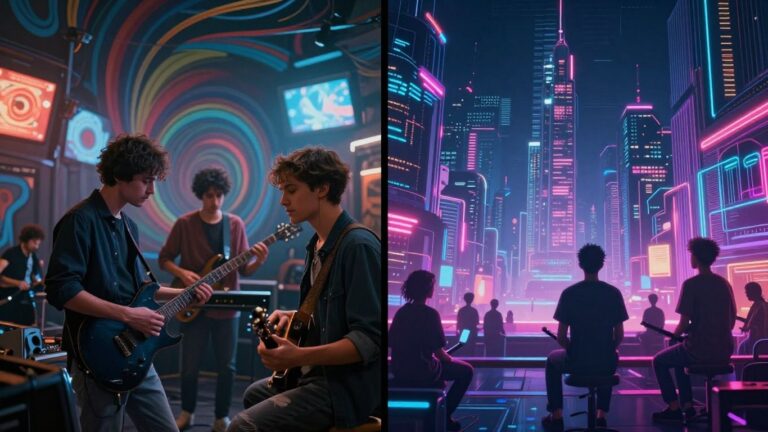
You’ve probably heard a lot about AI making music lately. It’s kind of wild to think about, right? Like, can a computer actually write a song? Well, yes, it can, and it’s getting pretty good at it. This whole area is called AI song generation. It’s not just for pros anymore; anyone can give it a shot. We’re going to break down what is AI song generation, how it works, and what you can do with it.
Key Takeaways
- AI song generation uses artificial intelligence to create music from text prompts or other inputs, acting like a digital composer.
- These tools can generate full songs with vocals, not just instrumental tracks, making them useful for many creators.
- Some platforms combine song creation and music video generation in one place, simplifying the workflow for content creators.
- AI music tools are becoming more accessible, meaning you don’t need deep musical knowledge or expensive gear to make songs.
- When choosing a tool, consider its quality, cost, and whether it offers features like combined song and video creation, which can save you time and money.
Understanding AI Song Generation
AI song generation is a new way to make music using computers. You can type in an idea, and the AI creates a song for you. It’s like having a digital band that can play anything you imagine.
What AI Song Generation Models Are
Think of AI music models as highly trained musicians. They’ve "listened" to thousands of hours of music to learn how songs are put together. These models use complex computer programs, like neural networks, to understand patterns in rhythm, melody, and harmony. They learn to create new music by studying existing songs.
These systems can generate everything from simple instrumental loops to full tracks with vocals. They take your instructions, like a genre or mood, and turn them into actual music. It’s a big change from how music used to be made, where you had to play every instrument yourself.
How AI Music Generators Work
AI music generators work by taking your input and processing it through their trained models. If you give them a text prompt, like "a chill lo-fi beat for studying," the AI analyzes those words. It then uses its knowledge of music to create a track that matches your description. Some models use techniques similar to how language AI writes text, predicting what comes next in a musical sequence. Others start with random noise and gradually shape it into a song.
This process allows for quick creation of original music. You don’t need to know how to play an instrument or use complicated software. The AI handles the technical side, letting you focus on the creative idea. You can explore different styles and sounds easily.
The Difference Between Generative Music and AI Music
Generative music is a broader term for any music created using automated processes. This could be simple algorithms or complex systems. AI music generation is a specific type of generative music that uses artificial intelligence, particularly machine learning, to create the music.
So, all AI-generated music is generative, but not all generative music is AI-generated. AI models learn and adapt, often producing more complex and nuanced results than older generative methods. This makes AI a powerful tool for creating music that sounds surprisingly human-like [a74a].
AI music generation is about using smart computer programs to create songs. These programs learn from lots of music to make new tunes based on what you tell them. It’s a tool that makes music creation easier for everyone.
Core Capabilities of AI Song Generation Tools
AI song generation tools have moved beyond just making simple loops. They can now create full songs with vocals, write lyrics, and even help you refine your ideas. Think of them as powerful assistants that can handle a lot of the heavy lifting in music creation.
Text-to-Song Creation
This is where you describe the song you want in plain language. You can specify the genre, mood, tempo, and even lyrical themes. The AI then takes this description and builds a complete musical piece. It’s like telling a composer exactly what you’re hearing in your head. Some tools offer simple modes where the AI handles everything, while others give you more control over the specifics.
Generating Full Songs with Vocals
Many AI tools can now produce not just instrumental tracks but also songs with AI-generated singing vocals. This means you can get a complete song, ready to go, without needing to hire a singer or use your own voice. The quality of these AI vocals has improved significantly, making them a viable option for many projects. Some platforms even allow you to choose different vocal styles or characteristics.
AI-Assisted Lyric Writing
Stuck on lyrics? AI can help with that too. You can provide a theme or a few starting lines, and the AI can generate verses, choruses, or even suggest rhymes. This feature is great for overcoming writer’s block or exploring different lyrical directions. It’s not about replacing your creativity, but about giving you more options and speeding up the process. You can then edit and personalize the AI-generated lyrics to fit your vision perfectly.
The AI Song Generation Workflow
Getting your musical ideas into an AI generator is usually a straightforward process. Most tools are designed to be user-friendly, even if you’ve never produced music before. You’ll typically start by telling the AI what you want.
Inputting Your Song Idea
This is where you describe your song. You can do this in a few ways. Some tools let you type a simple text prompt, like "a happy acoustic song about a sunny day." Others allow you to write your own lyrics, perhaps with specific sections like verses and choruses marked out. You might even be able to provide keywords or themes for the AI to work with. The more detail you give, the closer the AI can get to your vision.
Selecting AI Models and Settings
Many AI music generators offer different models or settings. Think of these like different instruments or production styles. Some models might be better for professional-sounding tracks, while others are quicker for demos or experimentation. You might also find options to adjust tempo, mood, or genre. It’s worth trying a few different settings to see what results you get. Exploring different AI music generators available in 2026 can help you find the best fit for your needs.
Generating and Refining Tracks
Once you’ve set your idea and chosen your settings, you hit generate. The AI will then create a song based on your input. This might take a few seconds or a few minutes, depending on the tool and the complexity of the song. After the first generation, you can usually listen to the track and make adjustments. You might regenerate parts, tweak the lyrics, or try a different model. This iterative process helps you get closer to the final song you want.
The goal is to use the AI as a collaborator. You provide the direction, and the AI helps bring it to life. Don’t expect perfection on the first try; refinement is part of the creative process.
Here’s a general idea of how the workflow might look:
- Describe your song: Use text prompts, keywords, or write lyrics.
- Choose your AI model: Select based on quality, cost, or specific features.
- Set parameters: Adjust tempo, genre, mood, or other available options.
- Generate the track: Let the AI create the music and vocals.
- Review and refine: Listen, make changes, and regenerate as needed.
- Export your song: Save the final version for use.
Integrating AI Music Creation with Video
You’ve got your AI-generated song, but what about the visuals? Many AI tools now let you create music videos right alongside your audio. This means you can go from a song idea to a finished music video without needing to switch between multiple complex programs.
Combining Song and Video Production
Some platforms offer a combined workflow. You can input your song idea, have the AI generate the music and vocals, and then immediately create a video to match. This is a huge time-saver. You can produce a complete music video package from a single interface. This approach is perfect for independent artists or content creators who need to work efficiently.
Supported Input and Output Formats
When you’re creating a music video, the formats matter. You’ll want to know what kind of files you can upload for video generation and what formats you’ll get back. Common audio inputs include MP3 and WAV files. For video output, you’ll typically find options like:
- 9:16 (for TikTok, Reels, Shorts)
- 1:1 (for Instagram feed)
- 16:9 (for YouTube and standard video)
This flexibility ensures your video is ready for any platform you plan to use. You can even find tools that help you create compelling visual content for your music.
Creating Music Videos Without Editing Skills
Don’t have a background in video editing? No problem. Many AI music video generators are designed for ease of use. You simply select a visual style, and the AI handles the rest, syncing the visuals to your audio’s tempo and mood. Some tools even offer different styles, from cinematic looks to animated sequences or lyric videos. You can explore the best tools for creating videos with AI. It’s about getting your music out there with a visual component, even if you’re not a video pro.
The goal is to simplify the entire process. You describe your song, the AI makes it, and then the AI makes a video for it. This removes technical hurdles that used to require specialized skills and expensive software.
Key Features and Benefits
AI song generation tools bring a lot to the table, making music creation more accessible and efficient than ever before. You get powerful features that simplify complex processes. These tools are designed to put creative control directly into your hands.
Accessibility for All Skill Levels
You don’t need to be a seasoned musician or audio engineer to create music. These platforms break down the barriers to entry. Whether you’re a beginner just exploring ideas or a professional looking for new tools, you can jump right in.
Streamlined Single-Platform Workflows
Forget juggling multiple software programs. Many AI song generators offer an all-in-one solution. You can go from a simple text idea to a finished song, and even a music video, all within one application. This saves you time and avoids the hassle of transferring files between different programs. It’s about keeping your creative flow uninterrupted.
Part of a Broader AI Ecosystem
Some platforms are more than just music makers. They are part of a larger suite of AI tools. This means you might have access to features like AI avatars, image generation, or text-to-video capabilities alongside your music creation tools. This integration allows for more complex projects and creative synergy across different media types. You can find tools that combine text-to-song generation with AI singing vocals and audio-to-music-video production in a single workflow.
Cost-Effectiveness and Efficiency
Creating professional-sounding music often involves expensive software, studio time, and skilled personnel. AI song generation significantly reduces these costs. You can experiment with numerous ideas quickly and affordably.
- Rapid Prototyping: Generate multiple song concepts at low cost to find the best fit.
- Reduced Studio Costs: Eliminate the need for physical studio rentals and equipment.
- Time Savings: Automate time-consuming tasks like arrangement and mixing.
The ability to generate royalty-free music quickly and affordably is a game-changer for content creators and independent artists alike. It democratizes music production, allowing more people to bring their sonic visions to life without a massive budget or years of training. This makes professional-quality audio achievable for a wider range of projects.
Output Quality and Flexibility
Modern AI models can produce surprisingly high-quality audio. You can often choose different vocal styles, from pop to rock, and get instrumental tracks or full songs with vocals. Many tools also support exporting in various formats, like MP3 for general use or WAV for professional mixing and mastering. This flexibility ensures your generated music fits your specific project needs.
Choosing the Right AI Music Tool
Picking the right AI music generator can feel like a lot, especially with so many options popping up. You want something that fits what you’re trying to do without being overly complicated or expensive. Think about what you need most: is it quick song ideas, professional-sounding tracks, or maybe help with lyrics?
Comparing AI Song Generation Competitors
Different tools focus on different things. Some are built for speed and ease, letting you describe a song and get a result fast. Others offer more control, letting you tweak melodies, instruments, and even vocals. It’s worth checking out a few to see which interface clicks with you. For example, Suno and Udio are known for creating full songs with vocals from text prompts, but they don’t handle video. Tools like Creatus.AI combine song generation with video creation in one place.
Understanding Model Quality and Cost
AI models vary in how good they sound and how much they cost. Some models, like those offering premium quality, might use more credits or have a higher subscription fee. Cheaper or free tiers are great for testing ideas or making short demos. If you need professional releases, you’ll likely want to invest in a higher-tier model. Always check if there’s a way to hear samples before you commit to a plan.
Identifying Tools for Specific Needs
Consider your end goal. Are you a content creator needing background music for videos? Or maybe an independent musician looking to produce a full track with vocals? Some platforms are better suited for specific tasks. For instance, if you need music videos too, a tool that handles both song and video generation in one workflow makes things much simpler. Look for features that match your workflow, like multi-format video exports or advanced editing controls.
The best tool for you isn’t always the most popular one. It’s the one that helps you get your ideas out of your head and into the world with the least amount of friction. Don’t be afraid to try out free versions or trials to see what works best.
Here’s a quick look at how some models stack up:
| Model/Tool | Primary Focus | Key Strength | Cost Consideration |
|---|---|---|---|
| Suno / Udio | Text-to-song with vocals | High-quality song generation | Subscription-based |
| Creatus.AI | Song + Video Generation | All-in-one workflow | Free tier available |
| MusicLM (Google) | Text-to-music | Detailed prompt adherence | Limited access |
| MusicGen (Meta) | Open-source music generation | Flexibility, community-driven | Requires technical setup |
| Stable Audio 2.0 | High-quality audio generation | Audio-to-audio capabilities | Credit-based or subscription |
When you’re just starting, it’s often best to begin with simpler tools or free tiers. You can explore options like AI music generators for beginners to get a feel for the process. As you get more comfortable and your needs grow, you can then look into more advanced AI music generators for creators.
Picking the best AI music maker can feel like a puzzle. There are so many options out there, each with its own cool features. Think about what you want to create – do you need catchy tunes for a video, or maybe background music for a podcast? Understanding your goal is the first step to finding the perfect tool. Ready to explore some amazing AI music options? Visit our website to discover the best tools available and start making your own music today!
So, What’s the Takeaway?
Alright, so you’ve seen how AI can whip up a song from just a few words, and even turn that song into a music video. It’s pretty wild, right? Tools like Creatus AI are making it so you don’t need to be a music producer or a video editor to get something cool made. You just type, click, and out pops a song with vocals, and then a video to go with it. It’s not about replacing human artists, but giving you a new way to bring your ideas to life, whether you’re a musician, a content creator, or just someone messing around. It’s a practical tool that’s here now, and it’s only going to get more interesting.
Frequently Asked Questions
What exactly is an AI song generator?
Think of an AI song generator as a super-smart computer program. You tell it what kind of song you want – maybe a happy pop tune or a chill rock song – and it creates the music and even the singing for you. It’s like having a musician buddy who can instantly whip up a song based on your ideas, without needing you to play any instruments.
How do these AI music tools actually make songs?
These tools have learned from listening to tons of music. They understand how different sounds, rhythms, and styles fit together. When you give them a prompt, like ‘an upbeat song about summer,’ they use all that knowledge to put together a new song that matches what you asked for. It’s a bit like a chef using recipes they’ve learned to create a new dish.
Can I use AI to make a song and a music video together?
Absolutely! Some tools, like Creatus AI Music Video Generator, let you do both in one place. You can describe your song idea, have the AI create the music with singing, and then instantly turn that song into a music video. It’s a neat way to get a full package without switching between different apps.
Do I need to be a musician or video expert to use these tools?
Not at all! That’s one of the coolest parts. These AI tools are designed for everyone. You don’t need to know how to play an instrument or edit videos. You just need your ideas. The AI handles all the technical stuff, making music and video creation super easy, even if you’re a total beginner.
What’s the difference between AI music and ‘generative music’?
While they sound similar, they’re different. AI music is when a computer program composes a song based on what it learned from lots of existing music, kind of like imitation. Generative music is more like setting up a system with rules, and then letting it play out in unique ways, often with a human artist designing that system. Think of AI as a composer and generative music as a self-playing instrument you designed.
Are there free AI music tools I can try?
Yes, there are! Many platforms offer a free version or a free trial so you can experiment and see what they can do. This is a great way to get started and make some music or music videos without spending any money upfront. You can usually find these free options on their websites.