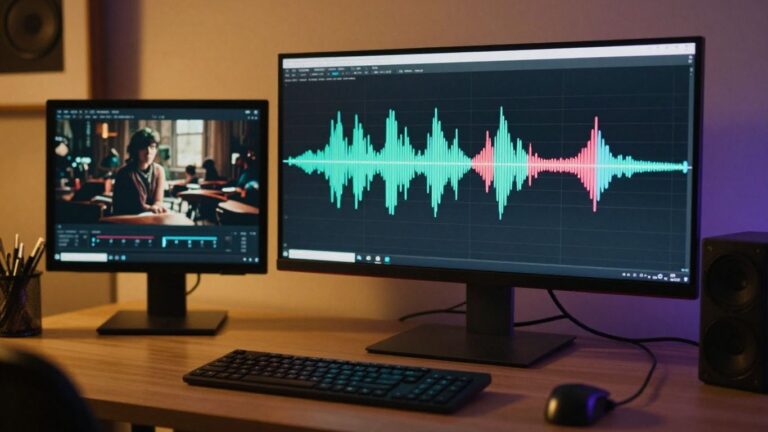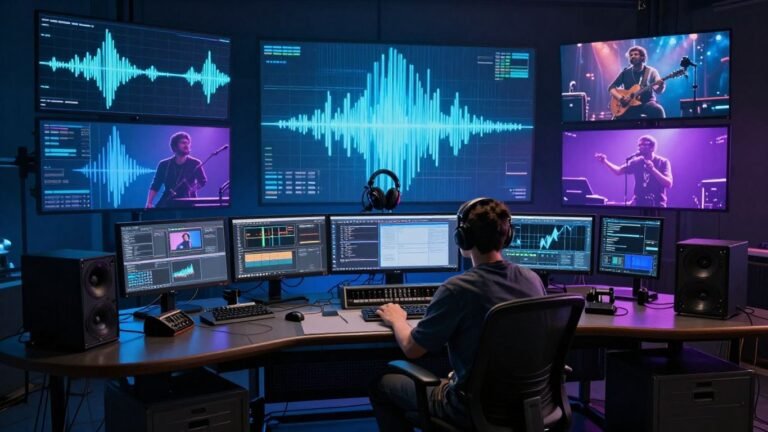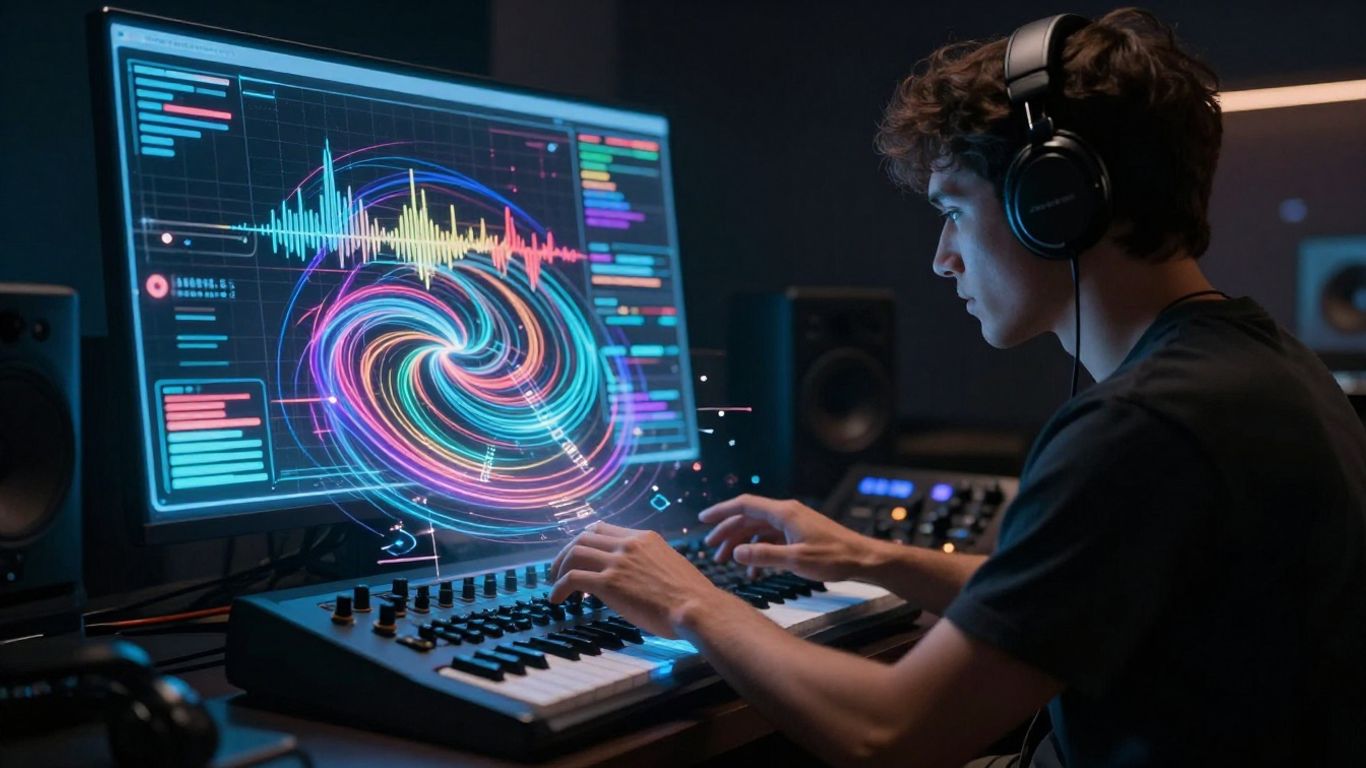
So, you’re a musician wondering what’s new with AI in 2026? It’s pretty wild how much has changed. Gone are the days when AI was just a fancy idea; now, it’s a real tool you can actually use to make music and videos. We’re talking about stuff that can write songs for you, make music videos from your audio, and even help you promote your tracks. It’s like having a whole production team in your computer, but way cheaper. Let’s check out what ai tools for musicians 2026 are out there and how you can use them.
Key Takeaways
- You can now find platforms that do both song creation and music video generation in one go, saving you from switching between different apps.
- AI tools can create full songs with vocals from just text prompts, and also turn your existing audio into music videos with different visual styles.
- These tools are getting easier to use, with many offering no-code options so you don’t need to be a tech whiz or a pro musician to get started.
- You can find free versions of these ai tools for musicians 2026, making them accessible for everyone, with paid plans offering more features.
- AI is becoming a partner in the creative process, helping with ideas, speeding up production, and making music creation more accessible for all skill levels.
Comprehensive AI Music Creation Platforms
By 2026, AI music creation platforms are no longer just experimental tools; they’re integrated workspaces. These platforms let you go from a simple idea to a finished track, often with accompanying visuals, all within one environment. You can describe the music you want, and the AI generates it, saving you significant time and effort.
Integrated Songwriting and Video Production Workflows
Some platforms now combine music generation with video creation. This means you can write a song and produce a music video without switching between different software. This all-in-one approach streamlines the entire creative process. It’s ideal for creators who need to produce content quickly for social media or other platforms. You can find tools that offer this dual functionality, making your workflow much smoother.
Text-to-Song Generation with AI Vocals
Generating full songs, complete with AI-generated vocals, is now a reality. You simply provide a text prompt detailing the genre, mood, tempo, and even lyrical themes. The AI then composes the music and creates a vocal performance to match. This technology is advancing rapidly, producing increasingly natural-sounding vocals. It’s a powerful way to create complete tracks when you don’t have vocalists available or want to experiment with different vocal styles. For creators looking for reliable alternatives, see our comparison in Mubert Alternatives.
Audio-to-Music Video Conversion
Beyond creating music, some platforms can also turn your existing audio into a music video. You upload your track, and the AI generates visuals that sync with the music. These tools often provide options for different visual styles and effects. You can control aspects like pacing and visual themes to match your song’s mood. This feature is a game-changer for musicians who want to produce engaging video content without complex editing skills.
Specialized AI Tools for Music Production
AI-Powered Composition and Arrangement
AI tools now help you compose and arrange music faster than ever. You can describe the kind of music you want, like a specific genre or mood, and the AI will generate musical ideas for you. This can be a great way to overcome writer’s block or explore new musical directions you hadn’t considered.
These systems analyze vast amounts of music data to understand patterns in melody, harmony, and rhythm. They can then create original pieces or variations based on your prompts. Think of it as having a co-composer who never runs out of ideas. You can even fine-tune the generated music directly within some tools.
Stem Separation and Remixing Capabilities
Need to isolate vocals or instruments from a track? AI makes stem separation simple. Tools can now pull out individual elements like drums, bass, vocals, or guitars from a mixed audio file. This is incredibly useful for remixing, sampling, or even just practicing along to your favorite songs.
This technology lets you create instrumental or karaoke versions of existing tracks with ease. It’s also handy for producers who want to precisely mix or re-balance specific instruments within a song. You can get clean stems quickly, saving hours of manual work.
Vocal Synthesis and Editing Tools
AI is changing how we handle vocals. You can now generate realistic-sounding vocal performances from text prompts, complete with singing. This means you can create full songs with AI vocals without needing to record a singer.
Beyond synthesis, AI tools offer advanced vocal editing. You can adjust pitch and tone to achieve specific vocal effects or use noise reduction to clean up recordings. These features help you polish vocal tracks to a professional standard, making your productions sound more complete.
AI for Visualizing Music
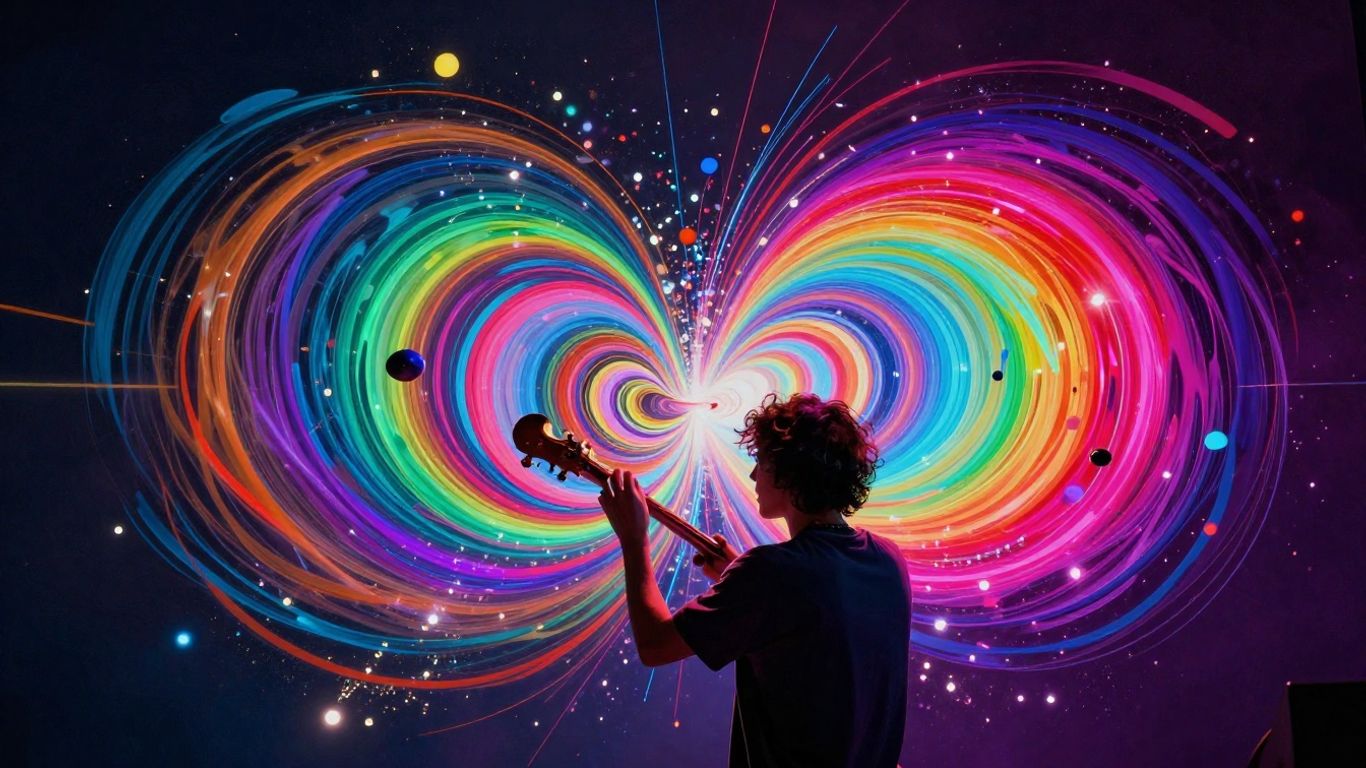
Creating a music video used to mean a big budget and a lot of crew. Now, AI tools can help you generate visuals that match your sound without all the hassle. You can turn your audio into a video, or even create a song and its video in one go.
Generating Music Videos from Audio
Got a track ready but no video to go with it? AI can analyze your music’s tempo, mood, and energy to create synchronized visuals. You just upload your audio file, pick a style, and let the AI do the work. It’s a fast way to get a video that fits your song’s vibe. Tools like Creatus AI offer this combined workflow.
AI-Driven Visual Styles and Effects
These tools don’t just make generic clips. You can choose from various visual styles, like cinematic, animated, or abstract. Some even offer performance modes or lyric video options. This lets you tailor the look to your specific genre and artistic vision. You can experiment with different effects until you find what works best for your music.
Multi-Format Video Export Options
Once your AI-generated music video is ready, you need to get it out there. AI platforms typically support multiple export formats. This means you can easily get videos optimized for different platforms. Whether it’s vertical for TikTok and Reels, square for Instagram, or horizontal for YouTube, you’re covered. You can get your music video ready for any screen.
Leveraging AI for Music Marketing and Distribution
Creating Promotional Content with AI
AI tools can help you make promotional materials quickly. You can generate short video clips or social media graphics based on your music. This means less time spent on design and more time on making music. These tools can even create different versions of your promotional content for various platforms.
Royalty-Free Music Generation for Content Creators
Need background music for your YouTube videos or podcasts? AI can generate royalty-free tracks tailored to your needs. You can specify the mood, genre, and length. This saves you from licensing fees and copyright issues. It’s a simple way to get custom audio for any project.
Optimizing Music for Social Media Platforms
AI can analyze trends on platforms like TikTok and Instagram. It can suggest optimal video formats and even help create short, engaging clips from your songs. This helps your music reach a wider audience. You can get insights into what kind of content performs best.
AI can analyze what’s currently popular on social media and help you create content that fits. This means your music has a better chance of being seen and heard by more people. It’s like having a marketing assistant that understands the latest trends.
Here’s a quick look at how AI can help with social media:
- Content Generation: Create short video snippets or visualizers for your tracks.
- Trend Analysis: Understand what types of content are performing well.
- Format Optimization: Adapt your visuals for different platforms like Reels, TikTok, and Shorts.
- Audience Engagement: Get ideas for posts that encourage interaction.
AI Music Tools: Accessibility and Workflow
No-Code Music and Video Creation
Forget needing to be a tech wizard or a seasoned producer. Many AI tools now let you create music and even music videos without writing a single line of code. You can describe what you want, and the AI handles the technical heavy lifting. This opens up music creation to a much wider audience. You can now focus on your ideas, not the software.
Streamlined Production Pipelines
AI is changing how you move from an idea to a finished track or video. Tools that combine song generation with video creation in one place cut down on switching between different apps. This means less time managing software and more time making music. Your workflow becomes more direct and efficient.
Free and Paid Tiered Access
Most AI music tools offer different access levels. You can often start with a free tier to test the waters and see what works for you. As your needs grow, paid plans usually provide more features, higher quality outputs, or commercial usage rights. This tiered approach makes powerful tools accessible to everyone, regardless of budget.
The Evolving Landscape of AI Music Tools in 2026
Key Differentiators in the Market
The AI music tool market in 2026 is really starting to branch out. You’ll find platforms that do one thing exceptionally well, like generating complex orchestral scores or separating audio stems with incredible accuracy. Then there are the all-in-one solutions, aiming to cover everything from initial song idea to final music video. The real winners are the tools that offer a unique workflow or a specific feature you can’t get elsewhere. Think about platforms that combine text-to-song generation with immediate audio-to-video conversion, saving you from switching between multiple apps. This integrated approach is becoming a major selling point.
Emerging Trends in AI Music Technology
We’re seeing AI move beyond just generating basic loops. Now, you can prompt an AI with detailed descriptions of mood, genre, and even specific instrumentation, and get surprisingly nuanced results. Expect more tools that focus on emotional resonance and human-like expression, blurring the lines between AI and human composition. Another big trend is the increasing sophistication of AI in handling copyright-safe content, which is a huge win for creators. The market is also seeing a rise in specialized AI for specific genres, allowing for deeper customization within those styles.
AI as a Collaborative Creative Partner
AI is no longer just a novelty; it’s becoming a genuine collaborator. You can use AI to break through creative blocks, generate endless variations on a theme, or handle the more tedious aspects of production. Instead of replacing human creativity, these tools amplify it. You can start with an AI-generated melody and then add your own instrumental layers or vocal performances. This partnership allows you to explore musical ideas faster and more freely than ever before. It’s about working with the AI to achieve your artistic vision, not just letting it do all the work. For those looking to get started, many platforms offer free tiers, making it easy to experiment with AI music creation without upfront costs.
Get ready for what’s next in AI music! By 2026, the tools for making music with artificial intelligence will be way cooler and easier to use. Imagine creating amazing tunes and sounds with just a few clicks. Want to see what’s already possible and get a head start? Visit our website today to explore the future of music creation!
Wrapping Up: Your AI Toolkit for 2026
So, that’s a look at what AI tools can do for you in 2026. You’ve seen how they can help you write songs, create music videos, and even mix and master your tracks. Tools like Creatus AI, for example, let you go from a text idea to a full song with vocals and then a music video, all without needing to switch between different apps. It’s about making the whole process simpler and faster. Whether you’re an indie artist trying to get your music out there or a producer looking to speed up your workflow, these AI options are here to help. Don’t be afraid to try them out and see how they fit into your creative process. The technology is here, and it’s ready for you to use.
Frequently Asked Questions
What’s the big deal with AI music tools in 2026?
Think of AI music tools as your super-smart music buddy! By 2026, they’re really good at helping you make songs and even music videos. You can tell the AI what kind of song you want, and it can create it for you, sometimes even with singing! It’s like having a whole band and video crew in your computer, making it easier for anyone to create music and visuals without needing tons of experience or fancy gear.
Can I really make a whole song and video with AI?
Totally! Some tools, like Creatus AI, let you type in your song idea, and the AI writes the music and sings it. Then, it can even turn that song into a music video that matches the vibe. You don’t need to be a music producer or video editor. It’s all about giving the AI your idea and letting it do the heavy lifting.
Are these AI music tools hard to use?
Nope, most of them are designed to be super easy! Many work like magic apps where you just type what you want. You don’t need to know complicated music terms or video editing tricks. The goal is to make music creation simple and fun for everyone, whether you’re just starting out or have been making music for a while.
Do I have to pay for these AI music tools?
It’s a mix! Lots of these tools offer a free version so you can try them out and make some cool stuff without spending a dime. If you want more features or need to make a lot of music, there are usually paid plans that aren’t too expensive, often starting around $9 a month. This way, you can start creating right away.
Can I use the music I make with AI for my own projects?
Yes, you usually can! Many AI music tools let you download the music you create, and some even give you the rights to use it for your videos, social media, or even to sell. It’s always good to check the specific rules for each tool, but the idea is to help you get your music out there.
Will AI replace human musicians?
That’s a big question! Think of AI more like a helpful assistant or a creative partner. It can help you come up with ideas faster, make parts of the music you might find tricky, or even create visuals for your songs. But the human touch – your unique feelings, style, and performance – is still super important and what makes music truly special. AI helps musicians do more, not replace them.