Key Takeaways
Creating music with artificial intelligence raises significant legal questions regarding ownership and intellectual property rights.
- Copyright protection requires meaningful human authorship, which pure AI cannot provide.
- Content created entirely by AI currently falls into the public domain immediately upon output.
- You must demonstrate significant creative control to qualify for copyright registration for your tracks.
- Documenting your editing process is essential for proving the transformative nature of your work.
- Legal frameworks regarding AI-generated music are still actively evolving across global jurisdictions.
Understanding current copyright laws for AI music
Copyright law historically protects work produced by human authors, and this principle remains the standard for AI-assisted music. While technology creates new possibilities for composition, the legal threshold for protection rests on human intent and creative input.
The requirement for human authorship
Only creative expressions originating from a human mind receive legal copyright protection. The U.S. Copyright Office maintains that the machine itself cannot be an author in the eyes of the law. You must act as the primary driver of the creative process to claim ownership.
Differences between AI-generated and AI-assisted works
AI-generated content refers to output produced by an algorithm with minimal human intervention, such as a single prompt without further refinement. By contrast, an AI-assisted work involves you using software to generate components that you then heavily edit, arrange, and modify to reflect your specific vision. At Animator Hub, many users treat our tools as a workspace for refining raw clips into professional projects through iterative creative steps.
Guidance from the U.S. Copyright Office
Official guidance regarding AI content specifies that while you can register a work that contains AI-generated elements, the copyright notice only covers the original human-authored parts. Any output that relies solely on machine generation lacks the requisite creative spark needed for registration. This distinction keeps the legal focus on the person, not the software.
Can you own a song authored entirely by AI?
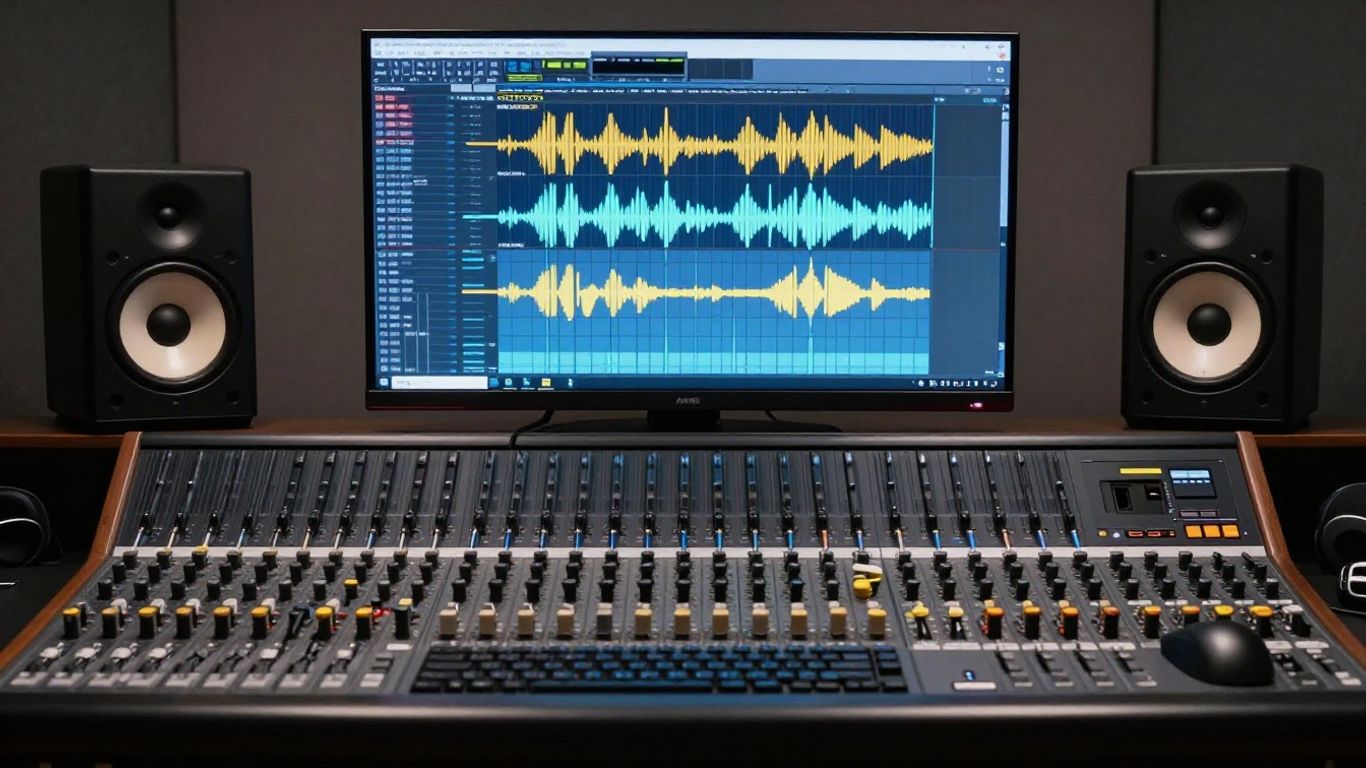
If you simply type a prompt and accept the raw result, you generally do not hold sole copyright over that audio file. Modern legal standards treat such outputs as works without human authors, rendering them unprotected in the eyes of the law, which carries specific risks for your commercial rights.
Why pure AI output lacks copyright eligibility
The fundamental issue is the lack of human creative expression at the point of generation. When a model produces a full song from a single command, no human has actually determined the melody structure, the arrangement of the lyrics, or the unique sonic signature in a way that the Copyright Office recognizes as legally protected work.
The limitations of registering machine-made musical works
You might attempt to register a purely AI-constructed file, but the application will likely be denied or restricted to only the specific segments where you provided original input. The following table illustrates what generally qualifies for protection versus what remains ineligible:
| Feature | AI-Only Output | Human-Assisted Composition |
|---|---|---|
| Melody Generation | No Protection | Protected |
| Lyric Writing | No Protection | Protected |
| Arrangement/Mix | No Protection | Protected |
| Selection/Combination | No Protection | Highly Protected |
Implications for public domain status
Because pure AI tracks do not meet authorship requirements, they often enter the public domain instantly. You cannot prevent others from using, sampling, or redistributing your music if you claim no unique human input. Many creators look to find clarity on the legal landscape by incorporating human-made arrangements to regain control over their intellectual property.
How to establish human authorship in AI projects
Proving originality requires you to step beyond simply hitting a generate button. Your role as an editor and producer becomes the primary factor in securing your rights.
Beyond the prompt: proving creative control
Creative control involves adjusting parameters, selecting specific stems, and combining outputs in unique ways. When you take raw results from tools like Animator Hub, you show artistic agency by choosing which motifs to keep and how to assemble the final product.
Modifying AI-generated arrangements and lyrics
The law values the changes you make to a baseline structure. If you take a generated track and alter the tempo, change key segments, or add your own vocal performance, you build a case for copyright. Making these edits shows that you are the author, not just the user.
The standard for significant human transformative expression
To qualify for protection, your modifications must be significant enough to be considered transformative. You must treat the AI segments as raw materials, similar to how you would treat a sample in a DAW. Here are specific ways to demonstrate this control:
- Rewriting lyrics or adjusting the rhythmic structure for better flow.
- Layering AI-generated melodies with original instrumental recordings.
- Utilizing multi-track editing to create a unique arrangement style.
- Providing specific narrative direction that dictates the final song structure.
Risks of using AI-generated music for commercial projects
Commercial projects carry a higher burden of proof regarding ownership. Using unverified AI material can lead to disputes if the model used training data that infringed on existing artists’ works.
Potential infringement of training data copyrights
Some AI models are trained on vast datasets of copyrighted music without permission from the original creators. If your generated output is too similar to a protected work, you might be liable for infringement, regardless of whether you personally used a machine to make it.
Evaluating platform terms of service and ownership rights
Always check the agreements of the tools you use to ensure they grant you commercial rights to the output. While Songbay offers specific pathways for protecting your works, other platforms may retain partial rights or explicit disclaimers that they cannot guarantee ownership. Understanding these terms is foundational to your business strategy.
Navigating claims from original human artists
If a copyright holder identifies similarities between your AI-generated track and their work, they may issue a takedown notice. You will need to show that your creation was independently derived or sufficiently transformed. Avoiding generic, high-traffic sounds helps mitigate some of these exposure risks.
Practical steps to protect your AI-assisted tracks
Protecting your assets requires proactive documentation. Building a paper trail of how you arrived at your final sound gives you the best chance of defending your copyright in the future.
Documenting your creative workflow and edits
Keep detailed records of your song production. Save drafts, edit notes, and project versions that demonstrate how you transformed the initial machine output into a novel composition. This demonstrates the effort, trial, and error that goes into real artistry.
Combining AI components with original compositions
Hybrid tracks that mix AI segments with your own recorded instruments are generally easier to protect. By grounding the song in your own creative input, you add a layer of human authorship that is harder to challenge. Always use tools that allow streamlined creative workflows so you can document your progress effectively.
Utilizing platforms with clear licensing and indemnity
Choose software providers that clearly spell out your rights. If a platform offers indemnity, they might cover liabilities arising from the use of their tools. Secure platforms for protecting your AI songs should be a priority for any creator serious about their career.
Preparing for the future of AI music regulation
Legislators are working to catch up with the rapid pace of music technology. Expect clearer standards regarding what constitutes authorship as international laws begin to standardize.
Emerging legislative trends in intellectual property
Governments are currently debating how to balance the rights of trainers with the rights of human creators. You should stay informed on evolving rulings, as these will likely affect how you register your work in the coming years. Laws are trending toward requiring disclosure of AI tools in creative production.
Moving toward industry-standard attribution markers
Watermarking, metadata, and standardized attribution are likely to become standard practice. Identifying which parts of your song were generated versus human-made will bring transparency to the industry. Following these standards early will help you maintain credibility with distributors and fans.
Balancing creative innovation with artist protection legislation
Future laws will likely focus on compensating human creators whose work trains the models you use. This will create a healthier ecosystem for everyone involved. Embracing these changes while protecting your own creative input will be a smart strategy for any independent artist.
Conclusion
Understanding what happens to copyright when ai makes a song requires you to embrace the role of an editor and author rather than just a passive user. While the technology is an incredible creative catalyst, securing your work demands that you provide the essential human spark that gives composition its legal life. Stay informed about the law, document your process thoroughly, and use AI as a tool within your own artistic vision to ensure you retain ownership of your music.
Frequently Asked Questions
Can I copyright a song created by AI?
No, a song created entirely by AI cannot be copyrighted because only works with human authorship qualify for protection under current law.
How much human input is needed to copyright an AI-assisted song?
There is no specific percentage, but the human input must be significant and transformative enough to show creative control over the final output.
If I edit an AI-generated song, can I own the copyright?
Yes, you can register the original parts you created or the specific arrangements you added, though the underlying AI-generated portions will likely remain outside of your copyright.
Are there risks to using AI music for commercial distribution?
You risk potential infringement claims if the AI model used training data that resembles protected, copyrighted works, and your ownership of the content may be challenged.
How does the Copyright Office know if a song used AI?
Applicants are expected to disclose the use of AI tools in their registration filings, and human examiners review the work to see if it demonstrates sufficient human creativity.
Should I mention AI use in my song registration?
Yes, you should describe the specific ways you utilized AI and the specific parts of the project that represent your original human authorship to ensure accuracy in your filing.
Do I need to document my AI editing process?
Keeping records of your creative decisions, edits, and original additions is highly recommended to substantiate your claim of authorship if your rights are ever challenged.