So, you’re wondering if those AI song generators can actually compete with the old reliable stock music libraries, right? It’s a big question for anyone making content these days. You need music, but you don’t want to break the bank or end up with something that sounds like everyone else’s video. Let’s break down what’s really going on with AI music versus the usual stock options.
Key Takeaways
- AI music generators create brand new tracks from text prompts, offering unique sounds every time, unlike stock music which can be used by many people, leading to duplication risks.
- While stock music has human-made emotional depth, AI music is getting increasingly expressive and can be tailored instantly to fit specific moods or branding needs.
- Stock music licensing can be complex with usage limits, whereas AI-generated tracks often come with simpler, one-time usage terms, potentially making them more cost-effective.
- AI tools can integrate directly into your creative workflow, generating music on demand without the manual searching and previewing typical of stock libraries.
- For creators needing both music and video, integrated AI tools like Creatus offer a combined workflow, eliminating the need for separate software and streamlining the entire content creation process.
Understanding The Core Differences: AI Music vs. Stock Libraries
How Each Type Of Music Is Created
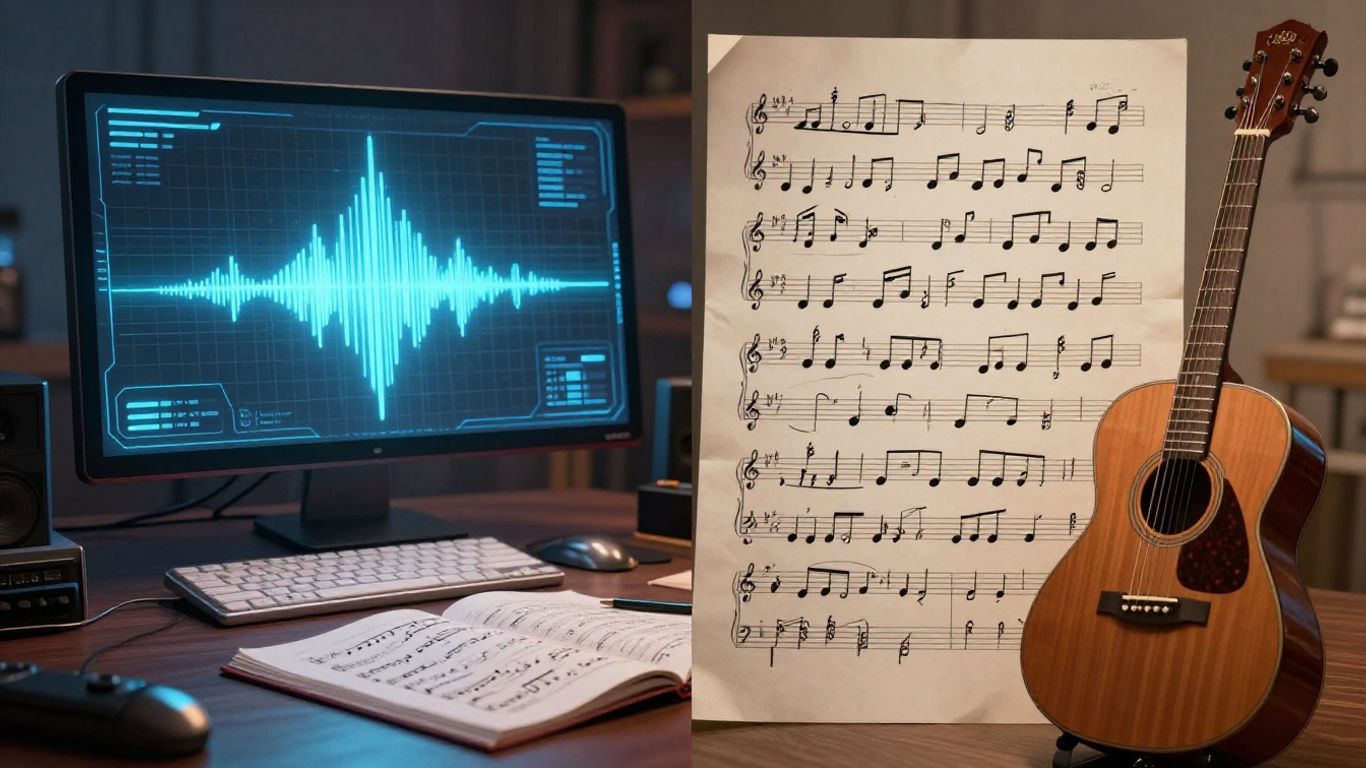
Stock music is pre-made by human composers and then licensed for reuse. You browse through libraries, pick a track, and pay for the right to use it. It’s a finished product ready to go. AI music, on the other hand, is generated on demand by artificial intelligence systems. You give the AI a prompt, like a mood or genre, and it creates a new piece of music just for you. This means you get something fresh every time.
The Concept Of Originality And Duplication Risk
When you use stock music, there’s always a chance someone else is using the exact same track for their project. This can make your content feel less unique. AI-generated music offers unlimited originality because each track is created from scratch. This significantly reduces the risk of duplication, helping your content stand out. You’re not just renting a song; you’re commissioning a unique piece.
Licensing And Ownership Nuances
Licensing for stock music can get complicated. You often get a limited license, and the original composer still holds some rights. This can lead to restrictions on how and where you can use the music. AI music platforms typically offer broader usage rights once you generate a track. This often means you have clearer ownership and fewer ongoing fees, simplifying the process for creators. It’s a key difference when you’re budgeting for your projects.
Evaluating Quality And Emotional Impact
When you’re choosing music, how it sounds and how it makes you feel are pretty important. You need to compare the audio quality and how well the music holds together. AI music has gotten much better at sounding coherent and professional.
AI’s ability to express emotion is improving fast. Modern AI can create subtle variations in instruments and dynamics that sound more natural. This means AI tracks can often match the technical quality you’d expect from studio recordings. You can explore how AI-generated music is transforming the music industry to see examples of this evolution.
Stock music, on the other hand, often has a human touch. Composers can inject specific emotional nuances that might be better for certain stories. The choice often comes down to whether you need background ambiance or a track that carries a specific emotional weight.
Here’s a quick look at how they stack up:
- Audio Fidelity: Both can achieve studio quality, but AI is rapidly closing any gaps. Stock music relies on human production skill.
- Musical Coherence: AI models are getting better at creating logical song structures. Stock music inherently has this due to human composition.
- Emotional Range: AI is becoming more expressive, mimicking human emotion. Stock music benefits from direct human emotional input.
While AI can mimic emotion, the authenticity of human composition might still be preferred for projects where deep emotional connection is the primary goal. Consider what your audience needs to feel.
For creators looking to understand the nuances of AI music quality, resources are available that compare different platforms and metrics. This can help you make a more informed decision about which type of music best suits your project’s needs.
Cost-Effectiveness For Creators
When you’re on a budget, the cost of music can really add up. You’ve got to figure out what makes the most sense for your project and your wallet.
Pricing Models Of Stock Music
Stock music libraries often work on a per-track basis. You might pay anywhere from a few dollars for a basic license to hundreds for extended rights. This can get expensive fast if you need multiple tracks.
Subscription plans are another option. These give you access to a library for a set monthly or annual fee. While this can be more affordable, you often don’t get exclusive rights, meaning others can use the same tracks. You might find plans that offer unlimited downloads for around $20-$50 a month, depending on the provider.
AI Generation-Based Costs
AI music generators typically use a pay-per-generation model or offer unlimited creation under a subscription. Some platforms let you generate tracks for a few dollars each. Others, like Mubert’s Creator plan, offer unlimited royalty-free downloads for about $11.69 per month, which is quite competitive for daily use. This on-demand, tailored approach can be significantly cheaper than buying individual stock tracks.
This model means you’re not paying for music you don’t use. You create exactly what you need, when you need it. It’s like having a custom composer on call without the hefty price tag.
Subscription Plans And Their Limitations
Many AI music tools offer subscription tiers. These can range from free basic plans with limited features to premium plans with unlimited generation and commercial rights. For example, some platforms provide a free tier to get you started, which is great for testing the waters. However, be aware of usage limits and potential watermarks on free exports.
While subscriptions offer predictable costs, they can still have limitations. You might face restrictions on the number of tracks you can download per month or the types of licenses you receive. Always check the terms to make sure the plan fits your needs. You can explore top AI music generators to see which pricing structures work best for you [3d8b].
Workflow Integration And Customization
Stock music libraries often require a manual approach. You’ll spend time searching through categories, previewing tracks, and then trimming them to fit your project. This process can eat up valuable creative hours.
AI music tools, on the other hand, can fit right into your existing creative process. Imagine connecting a text-to-music generator directly to your video editor. You describe the mood you need, and the AI creates a background track instantly. This kind of integration means less time spent searching and more time creating.
The real power comes with on-demand tailoring. Instead of settling for a close-enough stock track, you can ask the AI to adjust specific elements. Need a slightly different tempo? Want to change the instrumentation? AI tools let you refine the music until it’s exactly what you envisioned. This level of customization is difficult, if not impossible, with traditional stock music.
Here’s a quick look at how they compare:
| Feature | Stock Music Libraries | AI Music Generators |
|---|---|---|
| Search Process | Manual, time-consuming | Prompt-based, instant |
| Customization | Limited (trimming, basic edits) | High (tempo, instruments, mood) |
| Integration | Manual import/export | API, direct plugin options |
| Iteration | Re-downloading, re-editing | On-the-fly adjustments |
With AI, you’re not just picking a song; you’re directing its creation. This shift from selection to direction fundamentally changes how you approach audio for your projects. It allows for a much more dynamic and responsive creative workflow.
For example, you might use AI to generate a unique intro jingle for your podcast. Then, you could use the same platform to create background music that perfectly matches the tone of your episode. This eliminates the need to switch between different tools and services, streamlining your entire content creation pipeline. You can explore how AI music generation is transforming the music industry to see more examples of this integration. AI music generation is becoming a powerful tool for creators looking to save time and get exactly the sound they need.
The Rise Of Integrated AI Music And Video Tools
Combining Song Generation With Video Production
Think about the last time you needed music for a video. You probably searched through stock libraries, downloaded a track, and then maybe edited it to fit. Now, imagine doing both music and video creation in one go. Tools are emerging that let you generate a song and a matching video from a single idea. This means you can describe the mood, style, and even lyrics, and get a complete package.
Eliminating The Need For Separate Tools
This integration is a big deal for creators. Instead of juggling multiple platforms for audio and visuals, you can use one system. This saves you time and reduces the hassle of trying to make different tools work together. You can go from concept to finished content faster than ever before. It’s about simplifying your entire creative process.
Streamlining Content Creation Workflows
Platforms like BeatViz AI are leading the charge here. They offer a unified workflow where AI handles both the music composition and the video production. You input your creative vision, and the AI generates both elements, often in minutes. This approach is particularly useful for social media content, short films, or marketing materials where speed and consistency are key. You can explore other AI video generators to see how advanced these tools are becoming.
The future of content creation isn’t just about AI making music or AI making videos; it’s about AI making them together, in sync with your ideas.
Here’s what this integration means for you:
- Faster Turnaround: Generate music and video simultaneously, cutting down production time significantly.
- Cohesive Output: Ensure your music and visuals perfectly match each other’s mood and style.
- Reduced Costs: Potentially lower expenses by using a single integrated tool instead of multiple subscriptions.
- Simplified Workflow: Manage your entire creative project from one interface, making revisions easier.
This shift means you can focus more on the creative aspects and less on the technical juggling act. It’s a practical step towards more efficient content production.
Practical Considerations For AI Music Usage
Documentation and Legal Protection
When you use AI-generated music, keeping good records is key. Save all your prompts, notes on your creative process, and any changes you make to the music. This documentation can be your best defense if any legal issues pop up later. It’s about proving your involvement and the steps you took.
The Role Of Human Modification
Simply using AI output as-is might leave you in a tricky legal spot. Adding significant human creative input is vital. This means more than just adjusting the volume or EQ. Substantially altering the music, adding your own elements, or even rewriting lyrics (if applicable) strengthens your claim to ownership and originality. The more you transform the AI’s work, the more it becomes your work.
Avoiding Legal Pitfalls With Prompts
Be careful with your prompts. Asking the AI to create music "in the style of" a specific artist or song can lead to legal trouble. It’s best to avoid direct references that could infringe on existing copyrights. Focus on describing the mood, genre, and instrumentation you want instead. This helps keep your creations original and legally sound.
It’s important to understand the current landscape regarding AI music. The U.S. Copyright Office suggests fully disclosing AI-generated content when registering your work. Legal experts generally agree that human input, like selection and creative modifications, can qualify for copyright protection. Think of AI as a tool to assist your creativity, not replace it entirely. The more human involvement, the more secure your legal standing becomes.
Consider the long-term implications of using AI music. What happens if the platform you rely on changes its terms or shuts down? Can you prove the origin of your music if it’s questioned years from now? The convenience of AI music is appealing, but it’s worth weighing that against potential future uncertainties. You can explore some of the top AI music generation tools available, but always keep these practicalities in mind.
Thinking about using AI for your music? It’s a cool idea, but there are a few things to keep in mind. Making sure you understand how to use these tools right is super important. Want to learn more about the best ways to get started and avoid any mix-ups? Head over to our website for all the tips and tricks you need!
So, What’s the Verdict?
Look, if you need a quick, unique soundtrack for your project, AI song generators are definitely worth a look. They’re getting good fast, and you can get something custom made in minutes. Stock music libraries? They’re still around for a reason – they’re reliable and you know what you’re getting. But for originality and speed, AI is really starting to shine. You might need to try a few different tools to find one that clicks with your style, but honestly, the days of digging through endless stock music folders might be numbered for a lot of us.
Frequently Asked Questions
What’s the main difference between AI music and stock music?
Think of stock music like a pre-made playlist you can pick from. Someone already made it, and you pay to use it. AI music is like having a personal composer who creates a brand-new song just for you, based on what you tell them. It’s made on the spot, so it’s always original.
Can AI music sound as good as music made by humans?
Totally! AI music tools have gotten really good. By 2026, they can make music that sounds just as clear and well-put-together as human-made tracks. Sometimes it’s hard to even tell the difference, especially for background music.
Is AI music really original, or could someone else use the same song?
That’s a great question! Since AI makes music just for you when you ask, it’s way less likely that someone else will end up with the exact same song. Stock music, on the other hand, can be licensed by tons of people, so you might hear it everywhere.
How much does AI music cost compared to stock music?
Stock music can cost anywhere from a few dollars to hundreds, depending on how you want to use it. AI music often works on a pay-per-song basis or a monthly subscription where you can create as much as you want. For unique, custom tracks, AI can be a really cost-effective choice.
Can I use AI music for my videos or projects?
Yes, you usually can! Most AI music platforms give you rights to use the music you create for your projects, even for making money. It’s super important to check the specific rules of the AI tool you’re using, but generally, it’s designed for creators like you.
What if I want to make a music video too?
Some newer AI tools, like Creatus AI, can actually help you with both! You can type in your song idea, the AI makes the music and vocals, and then it can even create a music video to go with it. This means you don’t need separate tools for making songs and videos anymore.