You’re curious about the future of AI music videos, right? It’s a wild space right now, with tools popping up that can literally write a song and make a video from just a few words. Think about it – no more spending weeks editing or struggling to find the right music. This tech is changing how we think about making music and visuals, and it’s only going to get more interesting. Let’s check out where things are headed.
Key Takeaways
- AI tools can now create both music and video from text prompts, streamlining the entire process from start to finish.
- Advancements in AI mean music generation is getting better, with vocals and performances that are hard to tell apart from human-made tracks.
- Visuals for AI music videos are becoming more sophisticated, offering audio-reactive elements and easy customization for different platforms.
- The market for AI music and video tools is growing fast, with creators driving adoption and new platforms emerging.
- There are big questions around copyright, royalties, and what ‘authentic’ expression means when AI is involved in music creation.
Integrated Workflows For Music Video Creation
The Rise of Two-in-One AI Tools
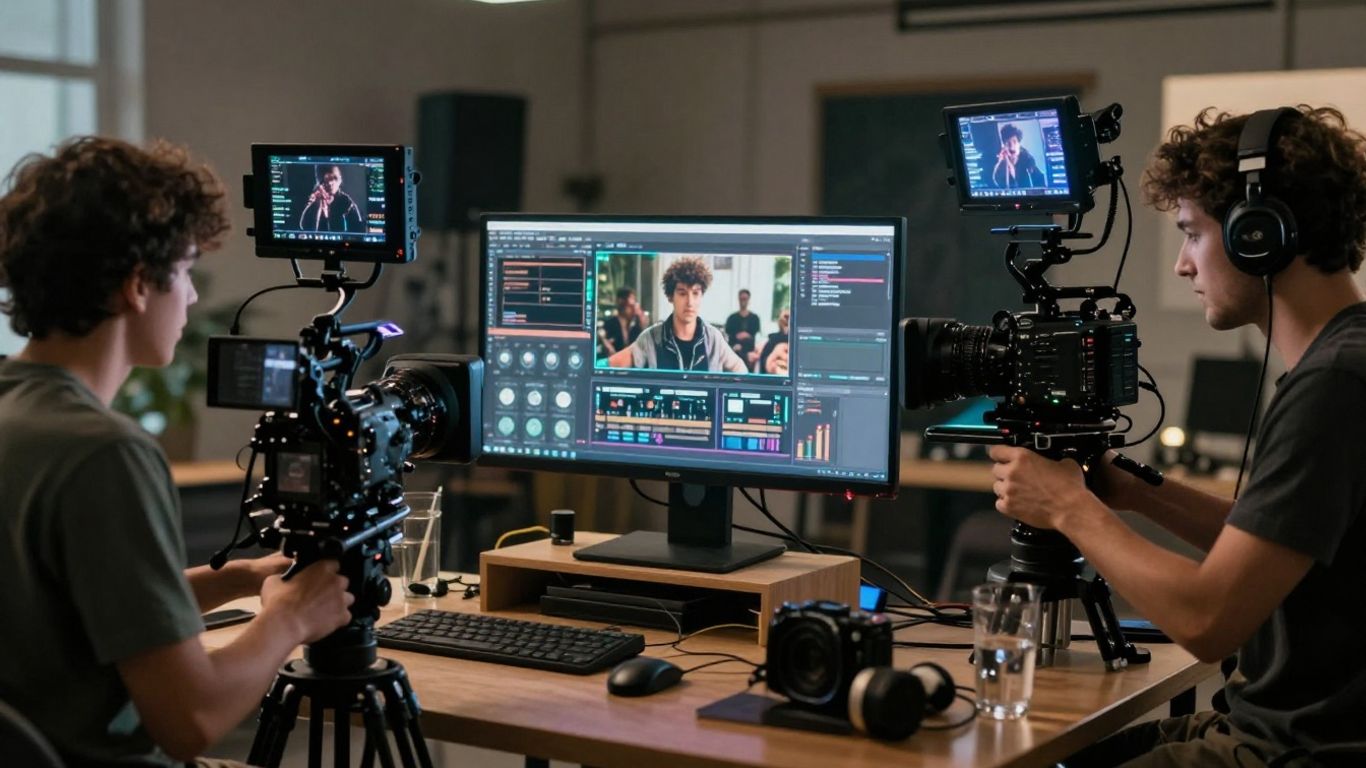
Forget juggling multiple apps. You can now find AI tools that handle both song creation and video production in one place. This means you can go from a simple idea to a finished music video without switching between different software. It’s about simplifying the entire process.
Streamlining Song and Video Production
These combined tools let you write a song using text prompts or lyrics, and then generate a music video to match. Some even offer AI singing vocals, so you don’t need to record them yourself. You can then select visual styles and let the AI create the video, synced to your new track. This cuts down the time and effort significantly.
Benefits of Unified AI Platforms
Using a single platform for both music and video offers several advantages. You avoid paying for multiple subscriptions and don’t need to learn different interfaces. It also means a smoother workflow, where the song generation directly informs the video creation. This integrated approach makes creating professional-looking music videos more accessible than ever before.
Advancements in AI Music Generation
AI is changing how music gets made, moving beyond simple loops to full songs. You can now generate entire tracks from text prompts, making music creation more accessible than ever. This technology is rapidly improving, offering new possibilities for artists and producers.
Text-to-Song Capabilities
You can now describe the music you want in plain text, and AI tools will create it. This includes specifying genre, mood, tempo, and even lyrical themes. These tools can produce complete songs with vocals, drastically lowering the barrier to entry for music creation. It’s like having a virtual band ready to go at your command.
AI Singing Vocals and Performance
Early AI music often lacked convincing vocals. Now, AI can generate realistic singing voices that adapt to the melody and emotion of the song. You can get full vocal performances, not just instrumental tracks. This makes AI-generated music much closer to human-created songs.
Quality and Distinguishability of AI Music
AI music quality has improved significantly. Many listeners can’t tell the difference between AI-generated tracks and human compositions. Some studies suggest over 80% of listeners struggle with this distinction. This growing indistinguishability means AI music is becoming a serious contender in the music landscape.
AI-Powered Music Video Visuals
Audio-Reactive Visuals and Storytelling
AI can now take your music and create visuals that move with the beat. You can upload your song, and the AI analyzes its rhythm, energy, and mood. It then generates video clips that sync up perfectly. This means you get a video that feels alive and connected to the music, without you having to manually time every scene.
Think about telling a story through these visuals. AI tools can help you craft a narrative that unfolds alongside your song. You can guide the AI with prompts about the themes or characters you want to see. This makes the video more than just pretty pictures; it becomes an extension of your song’s message.
Customization and Control in Video Generation
While AI does a lot of the heavy lifting, you still have control. You can choose from different visual styles, like cinematic, animated, or abstract looks. Some platforms even let you script scenes or select specific AI models to use for generation. This allows you to tailor the output to your specific vision.
It’s about finding the right balance between AI automation and your creative input. You can experiment with various styles and settings to see what works best for your track. The goal is to make the AI a tool that helps you realize your ideas, not one that dictates them.
Multi-Format Export for All Platforms
Once you’ve got your AI-generated music video, you need to get it out there. Modern AI tools understand this and offer flexible export options. You can easily generate versions optimized for different social media platforms.
This means you can get videos ready for:
- Vertical formats like TikTok, Instagram Reels, and YouTube Shorts (9:16)
- Square formats for Instagram feeds and other social posts (1:1)
- Standard horizontal formats for YouTube and general video sharing (16:9)
This multi-format export capability saves you time and ensures your video looks great wherever you share it.
Market Trends and Industry Adoption
Growth of the AI Music and Video Markets
You’re seeing a massive boom in AI tools for both music and video. The AI video generator market is expected to hit $3.4 billion by 2033, growing at a solid pace. Similarly, the generative AI in music market is also projected to reach over $7 billion in the next decade.
These numbers show that businesses and creators are really starting to adopt these technologies. It’s not just a niche thing anymore; it’s becoming a mainstream part of content creation. You can find AI music video generators for almost any need, from quick social media clips to more complex projects.
Key Players and Competitive Landscape
The market has a mix of companies. Some focus solely on music generation, like Suno and Udio, while others specialize in video, such as Neural Frames. Then you have integrated platforms like Creatus.AI, which offer both song and video creation in one package. This means you don’t have to switch between different tools for your music video project.
This competition is good for you. It drives innovation and pushes companies to offer better features and more accessible pricing. You’ll find a wide range of options, from free tiers to professional-grade solutions. It’s worth checking out what each platform brings to the table.
Content Creators as a Driving Force
Individual content creators and small to medium-sized businesses were the first to jump on these AI tools. They need efficient ways to produce engaging content without huge budgets or large teams. Now, these tools are moving into larger enterprises too, like game studios.
Content creators are really pushing the boundaries of what’s possible with AI music videos. They’re experimenting with new workflows and finding creative ways to use these technologies. Their demand for easy-to-use, high-quality tools is shaping the future of the industry. You can see this trend reflected in the development of platforms that offer features like copyright-safe content.
The rapid growth in AI music and video markets is largely fueled by content creators. Their need for efficient, cost-effective tools is driving innovation and adoption across the board. This user-driven demand is reshaping how music videos are made.
Addressing Legal and Ethical Considerations
Copyright and Ownership Challenges
When you use AI to create music videos, you’re stepping into some new territory regarding who owns what. AI models are trained on vast amounts of existing music and visuals. This raises questions about whether the output infringes on the copyrights of the original creators whose work was used for training. You need to be aware that the legal landscape for AI-generated content is still developing. It’s not always clear-cut who holds the rights to an AI-generated song or video – is it the AI developer, the user who prompted it, or the artists whose work influenced it?
The Role of AI in Artist Royalties
AI music generation tools can create songs that sound remarkably like human artists, sometimes even using cloned voices. This brings up complex issues around royalties. If an AI creates a song using a voice that sounds like a famous singer, or even a direct clone of their voice, how should that artist be compensated? Some artists are exploring ways to license their voice for AI use, like Grimes with her Elf.tech project, where she plans to split royalties. However, establishing fair and transparent systems for tracking and distributing these royalties is a significant challenge.
Authenticity and Human Expression in Music
Beyond the legalities, there’s the question of what makes music authentic. When you can generate a song and video with a few text prompts, does it diminish the value of human artistry and the years of practice it takes to master an instrument or vocal technique? Some worry that a flood of AI-generated content could devalue human creativity and make it harder for emerging artists to stand out. It’s a conversation about whether AI should be a tool to assist human artists or a replacement for them.
The Future of AI Music Videos
AI is changing how you’ll make music videos. You’re looking at a future where creating a song and its video happens in one go. This means less switching between tools and more focus on your creative vision. You can expect AI to become a standard part of your production toolkit.
Personalized and Adaptive Music Experiences
Imagine music videos that change based on who’s watching. AI could tailor visuals to your mood or even your location. This means every viewer gets a unique experience. Your music could connect with audiences on a much deeper, personal level.
AI as a Collaborative Tool for Artists
AI won’t replace you; it will work with you. Think of AI as a co-writer or a virtual bandmate. You can use it to explore new sounds or generate visual ideas you wouldn’t have thought of alone. This partnership will push creative boundaries.
The Evolving Role of Human Creativity
As AI handles more technical tasks, your role shifts. You’ll focus more on the big picture: the concept, the emotion, and the unique human touch. AI can generate options, but you decide what truly represents your art. Your creativity becomes the guiding force, not the bottleneck.
Imagine music videos that come to life just from your words! AI is making this a reality, letting anyone create amazing visuals for songs without needing fancy cameras or big teams. It’s like magic for musicians and creators. Want to see how easy it is to make your own AI music video? Visit our website today and start creating!
So, What’s Next?
Look, AI music videos aren’t going anywhere. Tools are getting better, and they’re becoming easier to use. You don’t need to be a tech wizard or a video pro to make something decent anymore. Whether you’re a musician trying to get your track noticed or just someone with a creative idea, these tools offer a new way to bring your vision to life. It’s about making the process simpler and more accessible. So, start experimenting. See what you can create. The future is here, and it’s ready for you to jump in.
Frequently Asked Questions
What exactly is an AI music video generator, and how does it work?
Think of it like a super-smart assistant that can create both music and a music video from just your ideas! You tell it what kind of song you want – maybe a happy pop tune or a chill rock song – and it writes and sings the whole thing. Then, it takes that song and makes a matching video for it, all by itself. You don’t need to know how to play an instrument or edit videos.
Can I really make a whole song with AI, including vocals?
Absolutely! Many AI tools can now create complete songs from scratch. You just type in your idea, and the AI comes up with the music, lyrics, and even sings it with a voice that sounds surprisingly real. It’s like having a virtual band and singer ready to go whenever you need them.
How good are these AI-generated music videos?
The visuals can be really impressive! AI can create videos that react to the music, telling a story or just creating cool, moving images. You often get to choose the style and control certain parts of the video, making it unique to your song. Plus, they can usually save your video in different sizes, perfect for TikTok, Instagram, or YouTube.
Is it expensive to use these AI music video tools?
Not necessarily! Many services offer a free version to get you started, so you can try them out without paying anything. If you want more features or need to make longer videos, they usually have paid plans that are pretty affordable, often starting at just a few dollars a month.
What about copyright and owning the music I create with AI?
This is a tricky area that’s still being figured out. While you can create music with AI, who actually owns it can be complicated. Some platforms let you use the music freely, while others might have specific rules. It’s always a good idea to check the terms of service for any AI tool you use to understand the copyright situation.
Will AI replace human musicians and artists?
That’s the big question! While AI is amazing at creating music and videos, many believe it’s more of a tool to help artists, not replace them. Human emotion, unique life experiences, and genuine creativity are hard for AI to replicate. Think of AI as a new instrument or a collaborator that can help artists bring their visions to life in new ways.