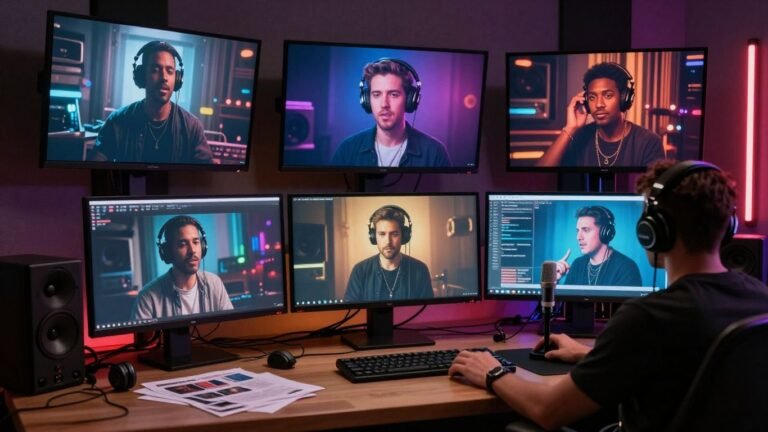
Thinking about making a music video with AI? It’s pretty cool how much you can do these days without needing a huge crew or fancy equipment. You can get some really unique looks, from super realistic scenes to totally abstract stuff. Let’s chat about what visual styles AI music videos can have and how you can get them looking just right for your music.
Key Takeaways
- AI can create music videos with styles ranging from realistic scenes to abstract art and animated motion graphics.
- Keeping your AI music video’s look consistent involves aligning color palettes, maintaining scene flow, and using specific AI models.
- Good AI music videos need motion that feels natural and matches the music’s rhythm and mood.
- AI tools are useful for independent artists, marketers, and educators who need quick, budget-friendly video content.
- AI streamlines music video production by generating songs and videos together, syncing them automatically, and allowing for easy editing.
Exploring Diverse Visual Styles For AI Music Videos
AI music videos aren’t limited to one look. You can explore a wide range of visual styles to match your music’s mood and message. Think about what kind of story you want to tell. The tools available today let you experiment with different aesthetics without needing a huge production team.
Cinematic Realism And Narrative Flow
This style aims for a movie-like feel. You’ll see realistic lighting, smooth camera movements, and scenes that connect logically. It’s great for songs that tell a story or have a strong emotional arc. Achieving this means focusing on details like depth, perspective, and how scenes transition from one to the next. Tools that excel here often use advanced AI models to create believable motion and environments. You can find examples of these cinematic AI videos to get a better idea.
Abstract And Experimental Visuals
If your music is more avant-garde or you want something truly unique, abstract visuals are the way to go. This can include non-representational shapes, unexpected color combinations, and surreal imagery. It’s about creating a feeling or a mood rather than a literal depiction. These styles can really help your video stand out from the crowd. They often work well with electronic music or tracks that explore complex emotions.
Animated And Stylized Motion Graphics
Motion graphics offer a versatile approach, blending animation with graphic design elements. You can create anything from character animations to dynamic text and abstract shapes that move in sync with the music. This style is perfect for conveying information, adding a playful vibe, or creating a visually engaging experience. Many AI tools can help you generate these kinds of animated video ideas quickly.
Achieving Visual Consistency In AI Music Videos
Making sure your AI music video looks like one cohesive piece, rather than a collection of random clips, is key. You want the visuals to feel connected to the music and to themselves. This means paying attention to details that tie everything together.
Leveraging Color Palettes and Mood Alignment
Color is a powerful tool for setting the mood. Think about the emotional tone of your song. Does it feel warm and mellow, or energetic and intense? You’ll want your video’s colors to match that feeling. For a chill acoustic track, soft, warm tones work well. High-energy electronic music might call for bright, contrasting neon colors. The right color palette makes your video feel intentional and professional.
Maintaining Scene Continuity and Camera Movement
When you generate multiple scenes for your video, you need them to flow. This involves keeping elements consistent between shots. If you have a character, they should look the same from one scene to the next. Similarly, how the ‘camera’ moves should feel natural and not jarring. Using templates for camera movement can help create a recognizable rhythm throughout the video. This attention to detail helps build a stronger visual narrative.
Utilizing Style Transfer Models Effectively
Style transfer models are like digital filters that apply a specific artistic look to your video. To keep things consistent, you should stick with the same style model for your entire project. If you switch styles mid-video, it can look messy. Think of it like using the same paintbrush and color set for a painting. Reusing a trained visual style model is a straightforward way to improve consistency. This is especially important if you’re aiming for consistent characters across multiple scenes.
Key Elements Of AI Music Video Visuals
When you’re creating AI music videos, a few things really make the visuals stand out and connect with your audience. It’s not just about generating pretty pictures; it’s about making them work with the music.
Motion Quality And Responsiveness To Audio
Think about how the visuals move. Fluid, believable motion is what pulls viewers in. If the animation is jerky or unnatural, it can pull them right out of the experience. The best AI tools make sure the motion feels alive and reacts to the music’s rhythm and energy. This audio-reactive animation makes the video feel like a cohesive part of the song, not just something playing alongside it.
Style Variety And Model Flexibility
Your music isn’t one-size-fits-all, and neither should your video visuals be. You need tools that can switch between different styles, from realistic scenes to abstract art or animated characters. Having access to various AI models means you can pick the perfect look for each song or even different parts of a song. This flexibility lets you experiment and find the unique visual language that fits your sound.
Prompt Engineering For Specific Aesthetics
Getting the exact look you want often comes down to how you talk to the AI. This is where prompt engineering comes in. You’ll learn to craft specific text descriptions to guide the AI toward your desired aesthetic. It’s about being precise with details like lighting, camera angles, and mood. Mastering this skill allows you to achieve consistent visual style across your projects, making your AI music videos truly your own.
Practical Applications Of AI Music Video Styles
Independent Musicians And Content Creators
For independent musicians, AI music video styles offer a way to create professional-looking visuals without a big budget. You can generate a video that matches your song’s mood and genre, helping you stand out on platforms like YouTube and TikTok. This means you can focus more on making music and less on the complex logistics of video production.
Content creators can also use these tools to produce engaging visuals for their music. Whether you’re promoting a new track or creating content for a playlist, AI offers a fast and flexible way to get the job done. You can experiment with different styles to see what connects best with your audience. Mastering prompt engineering is key here to get specific results like this guide explains.
Branding And Marketing Campaigns
Businesses can use AI music video styles for marketing. Imagine creating a unique video for a product launch or a social media campaign. AI allows for rapid iteration, letting you test various visual approaches to see which one performs best. This adaptability is great for staying on top of trends in the market.
AI can help you align visuals with your brand’s identity. You can define specific color palettes and moods to ensure consistency across all your marketing materials. This makes your brand more recognizable and memorable to consumers.
Educational And Informational Content
AI-generated music videos can also serve educational purposes. You might create a video to explain a complex topic or to accompany a lecture. The ability to generate visuals quickly means you can produce content on demand.
For informational content, AI can help visualize data or processes in an engaging way. This makes learning more accessible and interesting for your audience. You can tailor the visual style to suit the subject matter, whether it’s a serious documentary or a lighthearted explainer.
The Role Of AI In Music Video Production Workflows
AI is changing how you make music videos, streamlining the whole process. You can now go from an idea to a finished video without jumping between a dozen different apps. This means less time fiddling with software and more time being creative.
Integrated Song And Video Generation
Some AI tools let you create both the music and the video in one place. You can write a song idea, get AI vocals, and then generate a video that matches. This kind of integrated workflow cuts down on the steps needed. It’s a big change from needing separate tools for audio and visuals.
Audio-Reactive Visual Synchronization
AI can automatically sync visuals to your music. It analyzes the tempo, mood, and energy of your track. Then, it generates video clips that fit the rhythm and feel. This makes sure your visuals are always in tune with your song, creating a more engaging experience for your audience.
Iterative Generation And Editing Processes
AI allows for quick iteration. You can generate multiple video options based on your prompts and then pick the best parts. Tools are emerging that offer a timeline for editing, letting you arrange clips, add effects, and refine the final product. This iterative approach means you can experiment and improve your video until it’s just right, all within a single platform. You can even automate parts of the process, like detecting new files and generating metadata for uploads.
AI is changing how music videos are made. It can help with everything from coming up with ideas to putting the final touches on the video. This means artists and directors can create amazing visuals faster and easier than ever before. Want to see how AI can make your music videos shine? Visit our website to learn more and try it out!
Wrapping Up: Your AI Music Video Toolkit
So, you’ve seen the different ways AI can handle music videos. From slick cinematic looks to wild abstract stuff, there’s a lot you can do without needing a film crew. Tools that let you pick styles, control colors, and sync visuals to your music are the ones to watch. You don’t need to be a pro editor anymore; you can focus on the creative side. Just remember to generate more than you think you’ll need and be ready to tweak things. AI is here to help you make cool videos faster, so start experimenting and see what you can create.
Frequently Asked Questions
What kind of looks can AI make for music videos?
AI can create a bunch of different styles! Imagine super realistic scenes that look like a movie, or totally wild, abstract visuals that are like a dream. It can also do cool animated stuff, like cartoons or motion graphics that move with the music. You can even get it to make lyric videos where the words pop up on screen.
How do I make sure my AI music video looks the same throughout?
To keep things looking consistent, you’ll want to pick a color scheme and stick with it. Think about the overall mood you want – is it happy, sad, energetic? Make sure the AI knows this so the colors and scenes match. Also, try to keep the camera movements similar from one scene to the next, so it feels like one smooth video.
What’s the most important thing for AI music video visuals?
The visuals really need to match the music! The AI should make the pictures and animations move in time with the beat and the feeling of the song. It’s also great if the AI can create different kinds of scenes and styles so your video doesn’t get boring. Being able to tell the AI exactly what you want, like ‘a futuristic city at sunset,’ helps a lot.
Can regular musicians use AI to make music videos?
Absolutely! If you’re an independent musician, AI tools are amazing because they can help you make a music video without needing a big budget or fancy equipment. Content creators making videos for TikTok or Instagram can also use AI to quickly create eye-catching visuals. Even businesses can use it for ads or other marketing stuff.
How does AI help make the whole music video process easier?
Some AI tools can actually create the song AND the music video all in one go! You give it an idea, and it makes the music with singing, then turns that music into a video. This saves you from having to use different programs for music and video. Plus, AI can help sync the visuals perfectly to the audio, and you can easily make changes or try out different ideas.
Can AI create music videos that look like real movies?
Yes, AI can definitely create videos that have a cinematic feel! This means using realistic lighting, making the camera move like it would in a movie (like smooth pans or zooms), and making sure the scenes flow together nicely. It’s all about making the visuals look intentional and tell a story, just like in a film.