You’ve probably seen those slick music videos and wondered how they’re made. Maybe you’re a musician yourself, dreaming of a killer video but stuck with a tiny budget. Well, the world of video production is changing fast, and a lot of that change is thanks to AI. It makes you wonder, can AI replace a music video production team? Let’s break down what AI can do now, what it can’t, and what it might mean for the future.
Key Takeaways
- AI tools can now generate entire songs with vocals from text prompts and then create synchronized music videos, all within a single platform like Creatus AI, which is a big deal compared to using separate tools.
- While AI is great for automating tasks, editing, and even basic song creation, it still struggles with capturing genuine emotion, complex musical arrangements, and the unique perspective that comes from human lived experiences.
- AI can be a powerful assistant for production teams, handling repetitive jobs and speeding things up, but it’s not quite ready to completely take over the creative vision and nuanced decision-making that humans provide.
- For creators on a tight budget, AI offers a much cheaper and faster way to get a music video made, especially for social media content, making it a practical option for many.
- The future likely involves a mix of human creativity and AI capabilities, where AI handles the heavy lifting and technical aspects, allowing human artists and directors to focus on the artistic direction and emotional core of the music video.
Understanding AI Music Video Generation Capabilities
AI is changing how you can create music videos. You can now generate entire songs and their accompanying visuals using just text prompts. This means you can describe the genre, mood, and even lyrics you want, and the AI will put it all together. It’s a fast way to get a basic track and video concept down.
These tools also automate the process of syncing visuals to your audio. The AI analyzes the tempo, energy, and structure of your song. It then generates scenes and animations that match the music’s rhythm and feel. This takes a lot of the guesswork out of editing.
Integrated Song and Video Creation
Some AI platforms offer a complete package, letting you create both the music and the video within a single workflow. You can type in your song idea, complete with lyrics and desired style, and the AI composes the music and adds singing vocals. Then, you can take that generated song or your own audio file and have the AI create a synchronized music video. This eliminates the need to switch between different software for song production and video editing. It’s a streamlined process for getting a finished product quickly.
Automated Visual Synchronization
Getting visuals to match your music can be tricky. AI tools simplify this by analyzing your audio file. They pick up on the beat, the mood, and the overall energy of the track. Based on this analysis, the AI generates video content that aligns with the music’s flow. This means you get a video where the cuts, movements, and visual style feel connected to the song. It’s like having an editor who understands your music’s pulse.
Versatile Output Formats
Once your AI-generated music video is ready, you’ll want to share it across different platforms. AI tools typically support multiple output formats to suit various social media and video-sharing sites. You can usually export your video in vertical (9:16) for platforms like TikTok and Instagram Reels, square (1:1) for Instagram feeds, or standard horizontal (16:9) for YouTube and other websites. This flexibility ensures your video looks good wherever you choose to post it. You can explore various AI music video generators to see which best fits your needs.
AI’s Role in Music Production and Video Editing
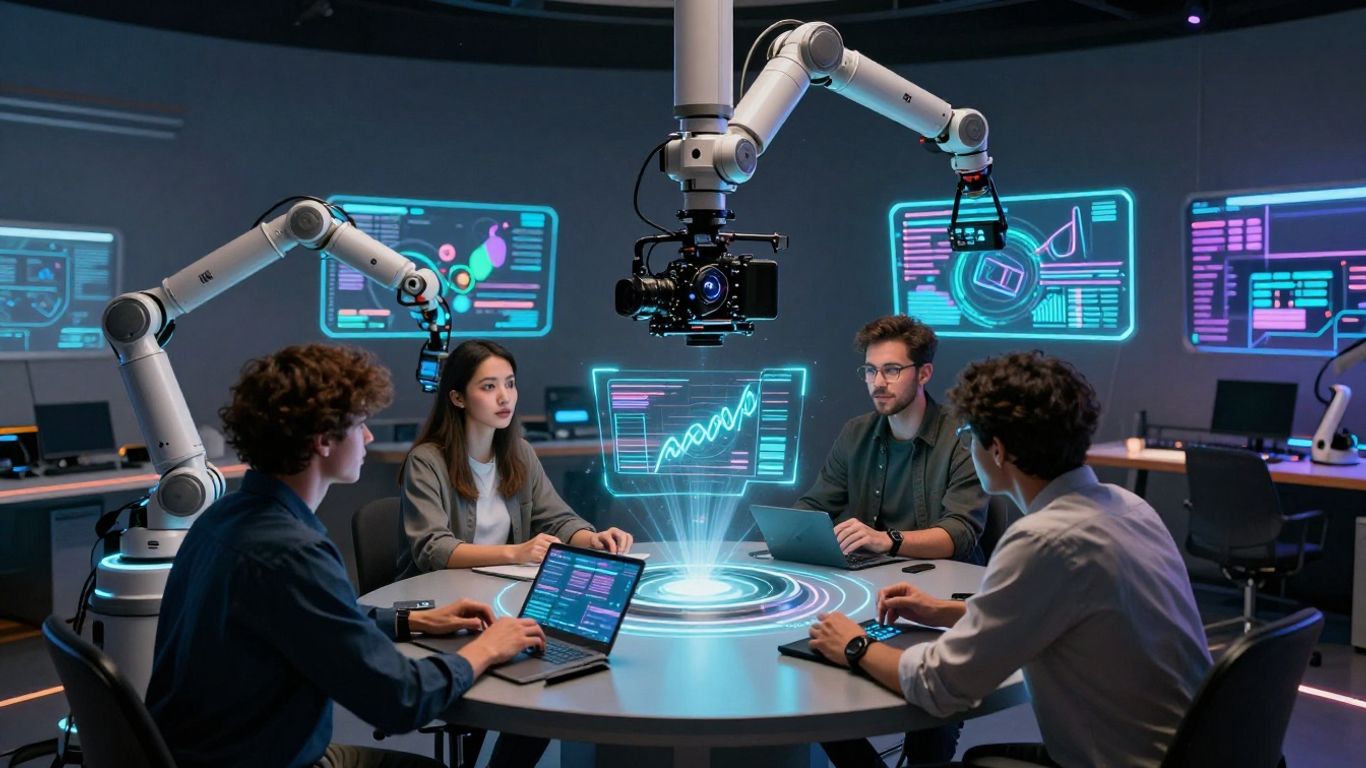
AI is starting to show up in music creation and video editing, making some tasks easier. You can use AI to generate song ideas or even full tracks. These tools work by analyzing huge amounts of music data to find patterns and create new arrangements.
AI for Song Composition
Think of AI as a brainstorming partner for your music. You can give it a genre, a mood, or even some lyrics, and it will generate a song. Some systems create MIDI files, which are like digital sheet music, while others produce complete audio tracks. This can be a quick way to get a starting point for a song. It’s not about replacing the songwriter, but about offering new possibilities.
AI for Video Editing Tasks
In video editing, AI can handle a lot of the grunt work. It can help with tasks like color correction, stabilizing shaky footage, or even generating background elements. Some advanced tools can even clone voices for narration. This frees you up to focus on the creative aspects of your video. You can find many AI video generators that offer these features.
Limitations in Current AI Music Generation
Despite the progress, AI still has its limits. While it can mimic styles, it doesn’t truly understand the emotion or lived experience behind music. It learns from existing songs, so it’s more about rearranging patterns than genuine innovation.
AI can create a convincing "sad piano track," but it won’t carry the same weight as something written by a person who has actually lived through heartbreak or joy.
AI also struggles with complex arrangements and doesn’t act as a true collaborator. The interaction is usually limited to prompts and outputs, lacking the back-and-forth of human creativity. Tools like LTX Studio are pushing boundaries, but the human touch remains important.
Comparing AI Tools to Traditional Production Teams
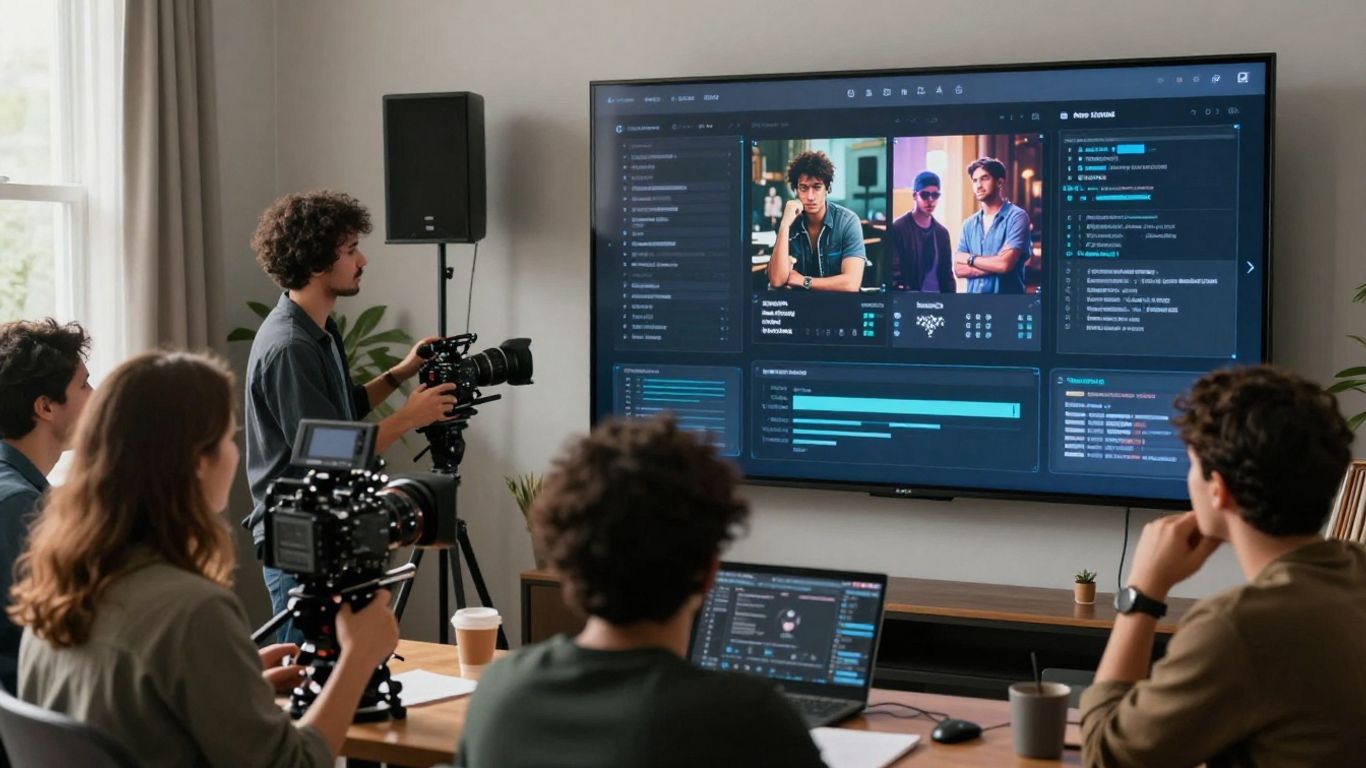
When you look at AI tools versus a full production team, it’s not always an apples-to-apples comparison. Think of it like this: AI can be a fantastic assistant, but it doesn’t quite have the same creative spark or nuanced understanding as a human crew.
AI as a Standalone Solution
For certain projects, AI can indeed handle the entire process. You can feed it a song, and it generates visuals. It’s great for quick turnaround times or when you have a very specific, repeatable style in mind. This is where AI really shines for solo creators or those with tight budgets. It offers a way to get a video out there without needing to hire multiple people or rent expensive equipment. You can get a basic music video generated for you, which is a big step up from having nothing at all.
AI as a Collaborative Tool
More often, you’ll find AI works best when it’s part of a larger workflow. Imagine using AI to generate initial concepts or rough cuts, and then a human editor refines them. This hybrid approach combines the speed of AI with the creative decision-making of people. It allows you to automate the tedious parts, like syncing beats or creating basic animations, freeing up your time for the more artistic elements. This is how many professionals are starting to integrate AI into their existing video production workflows.
The Human Element in Creativity
This is where traditional teams still hold a significant edge. A human director, cinematographer, and editor bring lived experience, emotional intelligence, and an intuitive understanding of storytelling that AI currently lacks. They can interpret subtle nuances in the music and translate them into compelling visuals in ways an algorithm can’t yet replicate. You can’t easily prompt an AI to capture that specific feeling of nostalgia or raw emotion that a seasoned professional can evoke. While AI can mimic styles, it doesn’t truly understand the art form in the way a human does.
Assessing the Practicality of AI Replacement
Cost-Effectiveness of AI Solutions
When you look at AI tools, the upfront cost is often much lower than hiring a full production team. You can find platforms that offer a subscription for a fraction of what a single day shoot might cost. This makes it accessible for artists with smaller budgets. The real question is whether the final output meets your quality standards.
Speed and Efficiency Gains
AI can generate video content at a speed that’s impossible for humans. You can go from a concept to a finished video in hours, not weeks. This rapid turnaround is a huge advantage for staying relevant in fast-paced online environments. It means more content, faster.
Scalability for Content Creators
Need to produce dozens of videos for different platforms? AI handles this easily. You can scale up your video output without needing to hire more people or rent more equipment. This is a game-changer for creators who need to maintain a consistent presence across multiple channels. It allows for competitive conversion rates and higher viewer retention.
AI tools are getting better, but they still need human direction. Think of them as powerful assistants, not replacements. You’ll still need to guide the AI, refine its output, and make the final creative decisions. The human touch remains vital for truly impactful work.
AI as a Standalone Solution
For some very basic needs, AI might be enough on its own. If you just need a simple visualizer for a track or a quick social media clip, an AI tool could do the job. It’s about matching the tool to the task. You won’t need a whole crew for every single project.
AI as a Collaborative Tool
More often, AI works best when you use it alongside human skills. You might use AI to generate initial concepts or rough cuts, then have a human editor polish it. This hybrid approach can speed up your workflow significantly. It’s about using AI to augment your team’s capabilities, not replace them entirely. Many AI video production services are already adopting this model.
The Human Element in Creativity
Creativity isn’t just about generating images or syncing beats. It involves understanding emotion, cultural context, and artistic intent. Humans bring lived experiences and unique perspectives that AI currently cannot replicate. This is where a human team still holds a significant advantage.
The Future Landscape of Music Video Production
Evolving AI Capabilities
AI is getting better fast. You’ll see tools that can generate more complex visuals and even entire song structures. Think about AI that understands musicality on a deeper level, not just beat matching. This means more sophisticated video elements that truly complement the music’s emotional arc. We’re moving beyond simple loops to more dynamic and responsive visual storytelling.
Hybrid Human-AI Workflows
Expect a blend of AI and human input. AI will handle the heavy lifting, like generating initial concepts or rendering complex scenes. You’ll then step in to refine, add your unique creative vision, and inject that human touch. This partnership allows for faster production without sacrificing artistic integrity. It’s about using AI as a powerful assistant, not a complete replacement. This approach is already revolutionizing video editing tasks.
Addressing Copyright and Ownership
This is a big one. As AI gets better at creating original content, questions about who owns it become more important. You’ll need to understand the terms of service for any AI tools you use. Clear guidelines are still being developed, so staying informed is key. This will shape how AI-generated music videos are used commercially. The industry is actively discussing AI video trends and their implications.
The legal and ethical frameworks surrounding AI-generated content are still catching up. You’ll need to be mindful of these evolving standards as you integrate AI into your workflow. Understanding ownership and usage rights will become as important as the creative process itself.
Here’s a look at how AI is changing the game:
- Faster Ideation: AI can generate multiple visual concepts from a single prompt, speeding up the brainstorming phase.
- Automated Rendering: Complex visual effects or background generation can be handled by AI, saving significant time.
- Personalized Content: AI could enable the creation of highly customized video variations for different audiences or platforms.
- Cost Reduction: Automating certain tasks can lower the overall budget needed for video production.
When AI Falls Short in Music Video Production
While AI tools are rapidly advancing, they still hit some walls when it comes to creating truly compelling music videos. You might find that AI struggles to capture the intangible elements that make a music video connect with an audience on a deeper level.
Lack of Emotional Depth and Nuance
AI can mimic styles and patterns, but it doesn’t feel. It can generate visuals that look sad or happy based on data, but it can’t draw from personal experiences of heartbreak or triumph. This lack of lived experience means AI-generated videos often miss the subtle emotional cues that resonate with viewers. A human director can imbue a scene with genuine feeling, something an algorithm can only approximate. You’ll notice this when comparing an AI’s attempt at a
Even with amazing AI tools, sometimes they just can’t capture the full picture for music videos. There are moments when human creativity and a deep understanding of emotion are still needed to make something truly special. If you’re curious about how AI can help, but also want to see what’s possible when you combine it with human talent, check out our website for more insights and examples!
So, Can AI Take Over Your Music Video Team?
Look, AI tools like Creatus are pretty impressive. You can type in a song idea, get a track with vocals, and then turn that into a video, all without touching complicated software. It’s fast, it’s cheap, and for certain projects, it might be all you need. But does it replace a whole team? Not really. A human team brings a level of creative vision, problem-solving, and that unique spark that AI just can’t replicate yet. Think of AI as a powerful new tool in your toolbox, not the whole workshop. You can use it to speed things up or handle specific tasks, but for a truly standout music video, you’ll still want those human eyes and minds guiding the process.
Frequently Asked Questions
Can AI actually make a whole song and music video by itself?
Yes, some AI tools can! For example, Creatus AI lets you type in an idea for a song, and it creates the music with singing vocals. Then, it can take that song and automatically make a music video that matches the beat and mood. It’s like having a one-stop shop for making music videos without needing to be a music producer or video editor.
Is AI good enough to replace human video production teams?
Right now, AI is great for certain tasks, like speeding up editing or creating visuals quickly. However, it still struggles with the emotional touch and unique ideas that human teams bring. Think of AI as a helpful assistant rather than a full replacement for experienced professionals who understand nuance and creativity.
How does AI help with editing music videos?
AI can help with editing by doing repetitive jobs super fast. It can sync video clips to the music’s beat automatically, help choose the best takes, or even create visual effects. This saves you a lot of time so you can focus on the more creative parts of putting the video together.
What are the biggest things AI can’t do well in music videos yet?
AI has a hard time capturing real feelings and deep meaning. It can make technically perfect videos, but they might feel a bit hollow. Also, complex song structures or very specific artistic visions can be tricky for AI to nail down perfectly. It lacks the life experiences that inspire human artists.
Is using AI cheaper than hiring a production team?
Often, yes! AI tools can be much more affordable, especially if you’re just starting out or have a small budget. Many offer free or low-cost plans. While a professional team costs more, they bring a level of expertise and polish that AI might not match yet, so it depends on your goals and budget.
Will AI and humans work together in the future for music videos?
That’s the most likely scenario! AI will probably handle the technical and time-consuming parts, like syncing video to audio or generating basic visuals. Humans will then step in to add their creative ideas, emotional depth, and unique artistic direction. It’s about using AI as a powerful tool to boost human creativity, not replace it entirely.