Ever wondered how to turn that cool audio file you have, like a podcast clip or a music demo, into a video? Well, you’re in luck! Creating an ai video from wav file is becoming super easy with new tools popping up all the time. You don’t need to be a video pro or have a huge budget anymore. We’ll walk you through how to take your sound and give it some visuals.
Key Takeaways
- You can make an ai video from wav file without needing advanced editing skills.
- Many tools let you upload your WAV file and then generate visuals that match the audio.
- Some platforms can even create a song from text and then turn that song into a video, all in one go.
- Think about what kind of video you want – something simple with captions, or more complex with animations – before picking a tool.
- After generating, you can usually tweak the video, add text, or change styles before you share it.
Understanding AI Video From WAV File Generation
What is an AI Video From WAV File Generator?
An AI video generator takes your audio file, like a WAV, and turns it into a video. It uses artificial intelligence to create visuals that match the sound. Think of it as an automated music video creator. These tools can add things like AI avatars, stock footage, or even abstract graphics to your audio.
Key Benefits of Using AI for WAV to Video Conversion
Using AI for this process saves a lot of time and effort. You don’t need to be a video editing expert to get a decent result. It’s a quick way to make your audio content more engaging for platforms like social media. This technology makes video creation accessible to more people.
- Speed: Generate videos much faster than traditional methods.
- Cost-Effectiveness: Reduces the need for expensive equipment or professional editors.
- Accessibility: Simplifies the video creation process for non-professionals.
- Engagement: Adds a visual element to audio, making it more appealing.
Core Components of the AI Video Generation Process
The process usually involves a few key steps. First, you upload your WAV file. Then, you might provide some text prompts or select visual styles. The AI analyzes your audio for rhythm, mood, and structure. Finally, it generates the video, often with synchronized captions. You can then review and make adjustments. Many tools support common audio formats like MP3 and WAV, making it easy to get started with your existing files. You can find tools that help convert audio to video quickly.
Preparing Your WAV File for AI Video Creation
Before you can turn your audio into a video, you need to make sure your WAV file is ready. Think of it like prepping ingredients before cooking; the better the ingredients, the better the final dish.
Ensuring Optimal Audio Quality in Your WAV File
High-quality audio makes a big difference in the final video. If your WAV file has background noise, static, or uneven volume, the AI might struggle to interpret it correctly. This can lead to choppy visuals or inaccurate lip-syncing. You might want to clean up your audio first. Tools exist that can remove background noise or even out volume levels with just a click. This step is pretty straightforward but really pays off.
Understanding Audio File Requirements for AI Tools
Different AI video generators have specific needs for audio files. Most tools accept common formats like WAV, MP3, and AAC. However, some might have limits on file size or duration. Always check the requirements of the specific AI tool you plan to use. This avoids upload errors and ensures a smoother generation process. For example, some platforms might prefer uncompressed WAV files for the best quality.
Best Practices for WAV File Structure
Consider the structure of your WAV file. If you’re creating a music video, the AI will often analyze the tempo, mood, and energy of the song. A clear song structure with distinct sections helps the AI create more dynamic and fitting visuals. For spoken word content like podcasts, ensure there are clear pauses between speakers or segments. This helps the AI segment the audio correctly for captioning and visual changes. You can even add simple markers if the tool supports it, though most tools work well with standard audio structures. If you’re unsure, a clean, well-edited audio file is always a safe bet. You can find tools that help convert your audio into AI videos, making the process simpler.
Preparing your WAV file is more than just uploading it. It’s about giving the AI the best possible source material to work with. Clean audio, correct formatting, and a logical structure all contribute to a better final video. Don’t skip this step if you want professional-looking results.
Here are some common audio formats accepted by AI tools:
- WAV
- MP3
- AAC
- M4A
Some tools might also support other formats, but these are the most widely recognized. Always check the specific tool’s documentation for a complete list. This ensures you don’t run into compatibility issues when you’re ready to start generating your video.
Selecting the Right AI Tool for Your WAV File
Choosing the right AI tool is key to turning your WAV file into a compelling video. You’ll want a platform that matches your needs, whether you’re making a music video, a lyric video, or something else entirely. Consider what features are most important for your project.
Evaluating AI Music Video Generators
Many tools focus specifically on creating music videos from audio. These often analyze the tempo and mood of your WAV file to generate matching visuals. Some can even create AI-generated vocals if you don’t have a song already. Look for options that offer a good range of visual styles and themes to fit your music’s genre. You might find that a tool like Google’s Veo 3.1 offers advanced capabilities for prompt adherence and visual accuracy.
Comparing Audio-to-Video Platforms
Beyond music videos, general audio-to-video platforms can also work. These tools might offer more flexibility if your WAV file isn’t strictly music, like a podcast or spoken word. They often focus on generating synchronized captions and can use AI avatars to represent a speaker. Some platforms support various audio formats, including WAV, and allow for customization of the avatar and background. It’s worth checking if they offer features like sound wave visualizations that move with the audio.
Choosing a Tool Based on Output Needs
Think about where you’ll share your final video. Different platforms support various aspect ratios, such as 16:9 for YouTube, 9:16 for TikTok and Reels, or 1:1 for Instagram feeds. Some tools allow you to edit the generated video further, adjusting captions, timing, or adding your own branding. If you need a quick, automated process, look for tools that require minimal input. If you want more control, find one with a robust editing suite.
Here’s a quick look at some common features to compare:
- Visual Style Options: Does it offer cinematic, animated, abstract, or lyric video styles?
- Caption Generation: How accurate are the auto-generated captions, and can you edit them?
- Avatar Integration: If using avatars, are there diverse options for appearance and language?
- Export Formats: Does it support the aspect ratios and resolutions you need?
- Customization: Can you add logos, watermarks, or other branding elements?
The best tool often depends on your specific project goals. Don’t be afraid to try out free tiers or trials to see which interface and output quality you prefer before committing.
When comparing, consider platforms that offer a unified workflow. Some tools combine song generation with video creation, meaning you don’t need separate software for each step. This can save time and simplify the entire process. Always check the supported input formats; most tools accept WAV, but it’s good to confirm.
The AI Video Generation Workflow from WAV
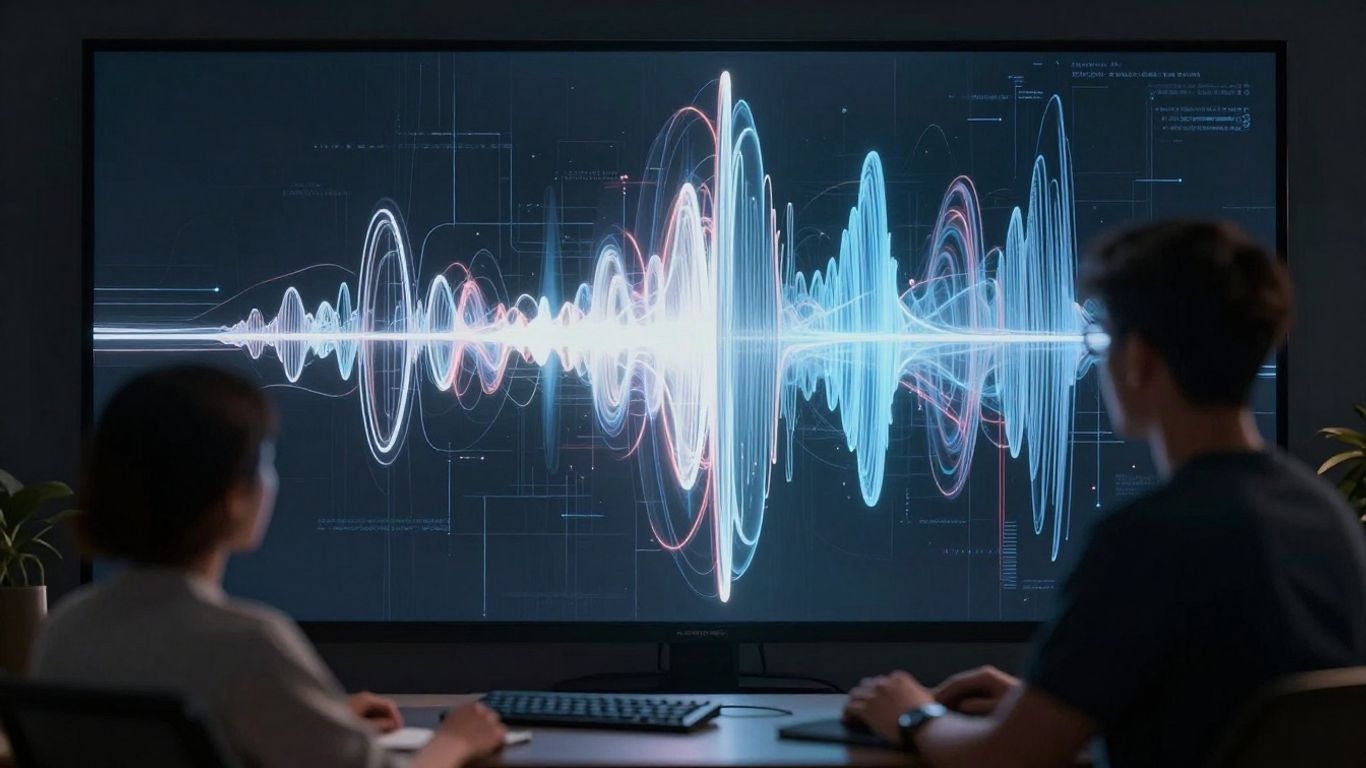
Turning your WAV file into a video with AI is a straightforward process. You’ll typically follow a few key steps, from uploading your audio to refining the final output. Most tools are designed to be user-friendly, even if you’re new to video creation.
Uploading Your WAV File
The first step is getting your audio into the AI tool. You’ll usually find an ‘upload’ button or a drag-and-drop area on the platform’s dashboard. Make sure your WAV file is ready and meets any specific requirements the tool might have, like maximum file size. Some platforms support various audio formats, but WAV is often preferred for its quality. You can explore different AI video generators to see which ones best fit your needs.
Prompting the AI for Visuals
Once your audio is uploaded, you’ll guide the AI on what kind of visuals you want. This is often done through text prompts. You can describe the mood, style, or specific scenes you envision. For music, you might mention genre, tempo, or lyrical themes. The more descriptive you are, the better the AI can match the visuals to your audio’s feel. Some tools also let you select from pre-set styles or themes.
Generating and Reviewing the Video Output
After setting up your prompts, you’ll hit the ‘generate’ button. The AI will then process your audio and prompts to create a video. This can take anywhere from a few minutes to longer, depending on the complexity and the tool’s speed. Once it’s done, you’ll get a preview. Review this initial output carefully to see if it matches your expectations. Check the synchronization, visual coherence, and overall aesthetic.
This review stage is critical. It’s your chance to catch any issues before moving on to more detailed edits. Think of it as a first draft; it’s usually good, but might need a little tweaking.
Here’s a general idea of what to expect:
- Synchronization: Does the video match the rhythm and mood of the audio?
- Visual Consistency: Do the generated scenes flow well together?
- Prompt Adherence: Did the AI capture the essence of your text prompts?
- Overall Quality: Does the video look and feel professional?
If the first generation isn’t quite right, don’t worry. You can usually go back, adjust your prompts, or tweak settings and generate again. This iterative process helps you get closer to your desired result.
Customizing Your AI-Generated Video
Once your AI has done the heavy lifting of turning your WAV file into a video, you’re not just stuck with the first draft. Think of this stage as where you really make the video your own. You can tweak visuals, add text, and generally polish it up.
Adjusting Visual Styles and Themes
Most AI video tools let you play around with the look and feel after the initial generation. You might be able to change the overall aesthetic, perhaps from a cinematic look to something more animated or abstract. Some platforms even allow you to select different visual themes that can alter the mood or style of the generated scenes. This is your chance to align the video’s visuals more closely with the emotion or message of your audio.
Editing Synchronized Captions and Text
AI is pretty good at generating captions that sync with your audio, but it’s not always perfect. You’ll likely want to review the generated captions for accuracy. Most tools provide an editor where you can correct any misheard words or adjust the timing. You can also add new text overlays, like titles or key messages, to highlight important parts of your audio. This ensures your message is clear and easy to follow.
Integrating Additional Assets and Branding
To make your video truly unique, consider adding your own elements. Many AI video platforms offer libraries of stock images, video clips, and music you can incorporate. You might also want to add your logo or specific brand colors. This step is key for maintaining brand consistency and making the video feel less generic. It transforms a standard AI output into a piece of content that represents you or your brand.
Exporting and Sharing Your AI Video
Once you’re happy with your AI-generated video, it’s time to get it ready for the world. This involves choosing the right format and optimizing it for where you plan to share it.
Understanding Supported Video Formats
Most AI video tools offer several export options. You’ll typically find common formats like MP4, which is widely compatible. Some tools might also support MOV or other less common formats. MP4 is usually your safest bet for broad compatibility. Consider the platform you’re uploading to when making your choice.
Optimizing for Different Social Platforms
Different social media platforms have specific requirements for video dimensions and file sizes. For instance, TikTok and Instagram Reels favor vertical 9:16 aspect ratios. YouTube often uses horizontal 16:9, while Instagram feeds might use square 1:1. Many AI tools allow you to select the output format that matches your target platform, saving you editing time later. You can convert your audio into video in 120+ languages to reach a wider audience.
Finalizing and Distributing Your Content
Before you hit upload, give your video one last watch. Check for any glitches or sync issues. Once you’re satisfied, download the final file. You can then upload it directly to your chosen social media channels, website, or wherever you want to share your creation. Tools like Creatus.AI offer multi-format export options, ready for any platform.
Once you’ve finished making your awesome AI video, it’s time to show it off! You can easily share your creation with friends or the world. Ready to start making your own videos? Visit our website today and begin your journey!
Wrapping Up
So there you have it. Turning your WAV files into AI-powered videos is pretty straightforward now. You can take that audio, feed it into a tool, and get a video back that syncs up. It’s not magic, but it gets the job done without needing to be a video pro. Give it a shot with your next audio project and see what you can create.
Frequently Asked Questions
What exactly is an AI video generator for WAV files?
Think of it like a magic wand for your sound! An AI video generator takes your WAV audio file, listens to it, and then creates a matching video all by itself. It’s like the AI watches and listens to your audio and then paints a picture with moving images that fit the mood and rhythm.
Do I need to be a pro at making music or videos to use this?
Nope! You don’t need to be a music producer or a video editing wizard. These AI tools are designed to be super easy to use. You just upload your WAV file, maybe give the AI a little hint about what you’re looking for, and it does most of the heavy lifting for you. It’s perfect for beginners!
What makes a WAV file good for AI video creation?
You’ll want your WAV file to sound as clear as possible. Imagine trying to understand someone talking in a noisy room – it’s tough! The same goes for AI. Clear audio with minimal background noise helps the AI understand the music or voice better, leading to a video that truly matches.
Can I use any WAV file I have lying around?
Most AI tools are pretty flexible and accept common audio formats like WAV and MP3. However, it’s always a good idea to check the specific tool’s requirements. Some might prefer certain audio qualities or lengths, but generally, if it’s a clean WAV file, you’re likely good to go.
How does the AI know what kind of video to make from my audio?
You usually get to guide the AI! You can often type in a description, like ‘upbeat pop music video’ or ‘calm nature sounds,’ or choose from different visual styles. The AI uses this information, along with analyzing the audio’s energy and rhythm, to create visuals that fit.
Can I change things in the video after the AI makes it?
Absolutely! Most tools let you tweak the video after it’s generated. You can often adjust text, change colors, add your own images, or even re-sync parts. It’s like having a digital editing suite right there to help you perfect your creation.