Key Takeaways
Choosing between AI tools for music requires balancing specialized audio production against unified video creation workflows. These two approaches cater to different creative needs regarding your final output.
- Dedicated music generators focus on high-fidelity audio synthesis for standalone composition.
- Integrated platforms like Creatus combine audio production with video generation for faster content cycles.
- Creators often prioritize platform speed when they need to sync songs with social media posts.
- Selecting the right tool depends on your specific requirement for either deep audio control or rapid media deployment.
- Evaluating cost-efficiency involves looking at the hidden time value of switching between separate applications.
Understanding the different goals of Suno and Creatus
The specialized mission of Suno in music production
Suno operates with a clear objective: to provide a powerful engine for generating full songs from simple text prompts. This focus on audio synthesis allows you to produce high-quality compositions without needing traditional musical training.
How Creatus integrates music and video generation
Creatus takes a different path by providing an all-in-one workspace designed to bridge the gap between sound and visuals. By combining text-to-song generation with an audio-to-video processor, it aims to eliminate the need for third-party media tools in your production pipeline.
Deciding between a dedicated music tool and an all-in-one suite
When choosing your path, consider whether your priority lies in advanced audio refinement or immediate content availability. If you require deep, multi-stem mixing capabilities, a specialized service like Suno might suit your technical needs better. However, if your goal is rapid asset generation for social platforms, an integrated solution often provides a more direct result.
Comparing workflow efficiency for content creators
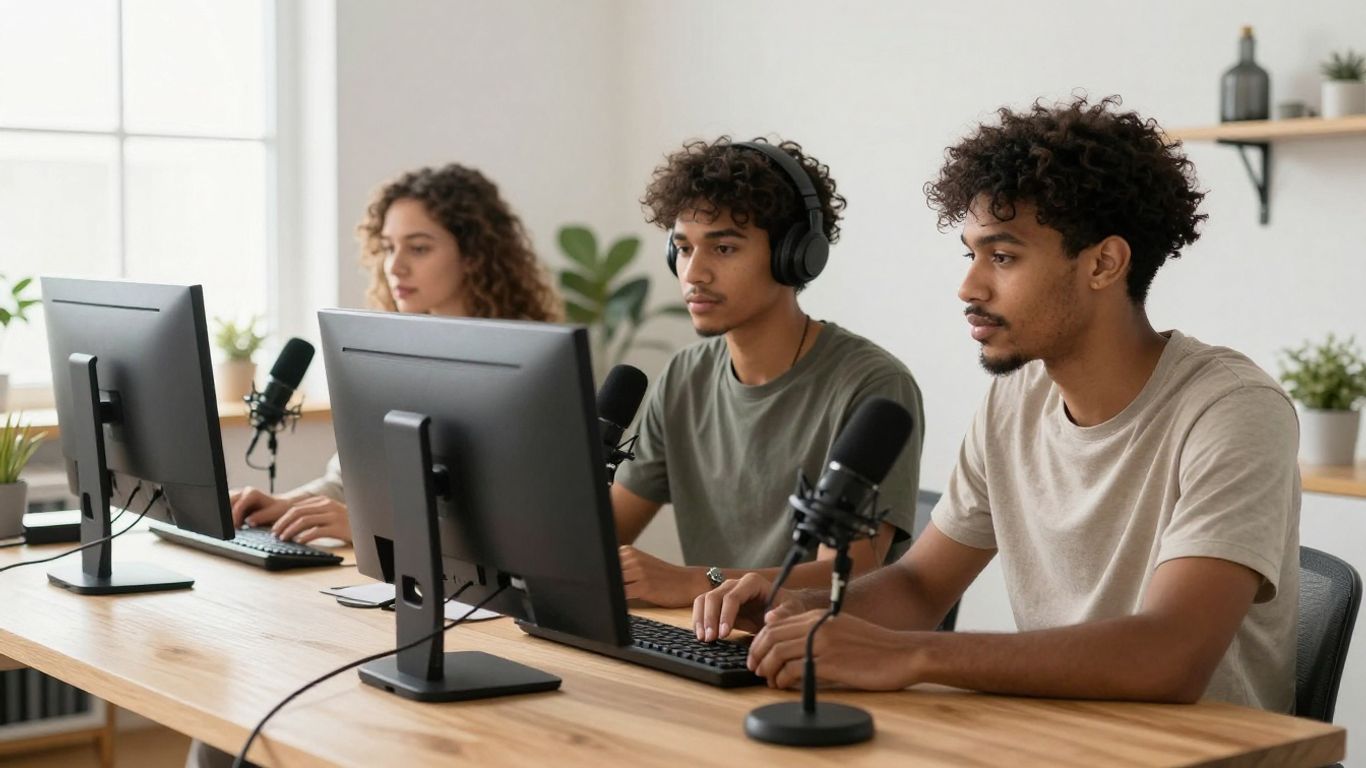
The multi-platform burden for users of specialized tools
Managing a suite of different applications for audio and video often breaks your creative momentum. When the tools fail to communicate, you waste time exporting, importing, and aligning files across disconnected software environments.
Streamlining social media content production via Creatus
By keeping your music and video creation under one roof, you bypass the common issues associated with format incompatibility. Once your song is ready, you can deploy your project to various aspect ratios instantly, making it ideal for high-volume content schedules.
Time-to-publish metrics for short-form video creators
For those needing to churn out frequent content for platforms like TikTok or Reels, speed remains the most critical factor. The following list highlights the stages you skip using an integrated platform:
- Locating and downloading external stock footage.
- Manually syncing audio beats to visual transitions in a separate editor.
- Exporting multiple high-resolution files for different platform formats.
- Managing separate subscription billing cycles for each creative service.
Assessing AI vocal and audio quality
Analyzing the realism of AI-generated singing vocals
Singing synthesis relies on neural networks trained to mimic natural resonance and phrasing. Most current platforms do well at capturing the essence of human delivery, though some still struggle with intricate emotional shifts in the melody.
Flexibility in genre and tempo customization
Adjusting variables like genre, tempo, and mood allows you to shape the output to fit your specific vision. This functionality is essential when you use your tracks for storytelling or scene-setting in promotional media.
Caveats of relying on AI-generated audio for professional projects
While the results are often impressive, you should always audit the audio for minor artifacts. Occasionally, the AI might hallucinate lyrics or create rhythmic inconsistencies that require slight adjustments in your editing software to ensure a polished final product.
Evaluating platform ecosystems and additional tools

How the Creatus ecosystem enhances production capabilities
Beyond music, having access to a wider set of AI tools means you can quickly swap video backgrounds or generate characters for your projects. This interconnectedness allows for a more fluid creative process where one asset directly influences the next.
Leveraging visual effects for music promotion
Using AI to generate visual identity components helps your tracks stand out in a crowded stream. You can craft cohesive branding assets without hiring external creative help, keeping your project’s visual style consistent with its sonic tone.
Comparing the depth of Suno’s music-centric features
If you prefer to focus solely on music, the Suno AI alternatives provide specialized controls to experiment with stem extraction and complex song structure design. This is useful for producers who want to integrate pieces into a full-scale digital audio workstation later.
Pricing structures and cost-efficiency
Subscription models and market barriers to entry
Most platforms provide entry tiers to help you test the technology without immediate commitment. You must decide whether to pay for a unified license that covers both video and music or manage multiple individual platform costs.
Hidden costs of integrating separate third-party video editors
When you use separate tools, you frequently end up paying for premium features in two or more apps. The table below outlines how this configuration impacts your monthly overhead compared to using an integrated suite:
| Feature Scope | Standalone Music App | Integrated AI Workspace | Multi-tool Combo |
|---|---|---|---|
| Music Generation | Included | Included | Included |
| Video Creation | None | Included | Separate Cost |
| Export Flexibility | Limited | High | High |
Analyzing the value of a single unified license versus platform-hopping
Choosing a unified tool often reduces your total monthly spend. By consolidating your software portfolio, you not only save money but also lower the administrative headache of tracking multiple subscriptions.
Best use cases for Suno versus Creatus
When to choose Suno for complex musical composition
Choose this tool when your primary objective is exploring the limits of AI-generated song structure. It remains a standard for creators who value audio-first workflows and deep technical control over every musical element.
Why content creators prioritize Creatus for rapid promotional campaigns
Creators who need to pump out consistent marketing material value the efficiency of Creatus. It serves those who want to turn an afternoon idea into a polished video release without learning post-production software.
Matching platform capabilities to your specific creative output goals
Consider your end goal: are you trying to sell a song or promote a message? Once you identify the primary deliverable, the choice between simple composition and integrated production becomes much clearer. Start creating here with the solution that fits your timeline.
Conclusion
Determining suno vs creatus which ai song generator is better depends entirely on the rhythm of your creative pipeline. Whether you thrive on the granular control of dedicated composition or the lightning-fast output of a unified suite, these technologies have lowered the barrier to entry for professional-grade media creation. By focusing on your specific workflow needs and understanding the core strengths of your chosen platform, you can produce content that consistently meets your highest standards without the usual technical friction.
Frequently Asked Questions
How does AI manage rhythm and tempo in music generation?
AI systems analyze vast datasets to identify structural patterns and time signatures, allowing them to predict appropriate beat placement and transitions based on the style parameters you input.
Can I use my own audio files instead of generating from scratch?
Most modern platforms allow you to upload your own audio files for processing, which the AI then analyzes to sync movements or visual overlays for your video.
What are the main limitations in audio realism?
While AI excels at genre-specific styles, it occasionally struggles with organic human nuances like subtle breath control, natural mic placement nuances, or keeping a melody consistent over a long track duration.
Is it possible to share my generated music videos on social apps?
Yes, these tools offer various export options, including standard social media aspect ratios like 9:16 vertical video and 1:1 square, tailored for direct distribution on mobile platforms.
Do I need to be a professional producer to use these platforms?
These interfaces are designed for accessibility, meaning you can start generating complex audio and video projects using natural language prompts without specific software skills.
How is copyright typically handled for AI music?
Ownership terms vary significantly by platform, although many allow you to keep the rights to the tracks you generate on a paid plan for use in your commercial or promotional projects.
Can I edit my song after it is generated?
Most advanced AI tools provide editing pathways where you can rewrite specific lyrical sections, reorder song parts, or even regenerate small segments to better match your creative vision.